
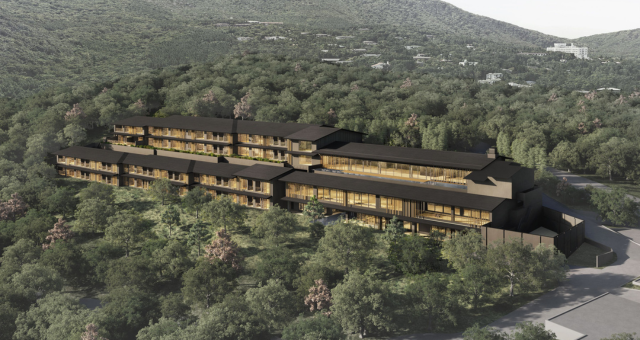
Hyatt Hotels Corporation has announced plans to introduce its Alila brand to Japan with the opening of Alila Sengokuhara Hakone in 2028, marking a significant luxury resort addition to its growing Japanese portfolio and the brand’s first entry into one of Asia’s most mature hospitality markets.
The resort is being developed under an agreement with Fujita Corporation and will be located in Sengokuhara, a highland district of Hakone known for its hot springs, mountain scenery, open grasslands and access to Fuji-Hakone-Izu National Park. For Hyatt, the signing extends its push into Japan’s upper-luxury and lifestyle resort segment at a time when international hotel groups are placing greater emphasis on differentiated, destination-led properties rather than conventional urban expansion alone.
Alila Sengokuhara Hakone is scheduled to open with 60 guestrooms, including 11 suites, with each room designed to feature a private natural hot spring bath. The resort will also include a yoga deck, a restaurant and bar, and curated guest experiences connected to the surrounding landscape, culture and seasonal rhythms of Hakone.
The project places Alila directly into one of Japan’s most established leisure traditions: the onsen retreat. Hakone has long served as a popular escape from Tokyo and other urban centres, attracting both domestic and international travellers through its thermal waters, volcanic terrain, art museums, forests and mountain views. By choosing Sengokuhara, Hyatt is positioning Alila in a setting that naturally aligns with the brand’s emphasis on nature, wellbeing, local culture and low-impact luxury.
David Udell, Group President, Asia Pacific, Hyatt, said the company is excited to introduce Alila to Japan, noting that the brand currently has 19 properties globally, including 13 in Asia. He said the debut would expand travel choices for domestic and international guests while offering experiences connected to culture and the environment.
The resort will be designed by Kengo Kuma and Associates, whose work is expected to shape the property around the natural contours of the mountain site. Rather than presenting the resort as a standalone architectural statement, the design approach is focused on integrating built forms with elevation changes, forest views, natural light and local material expression.
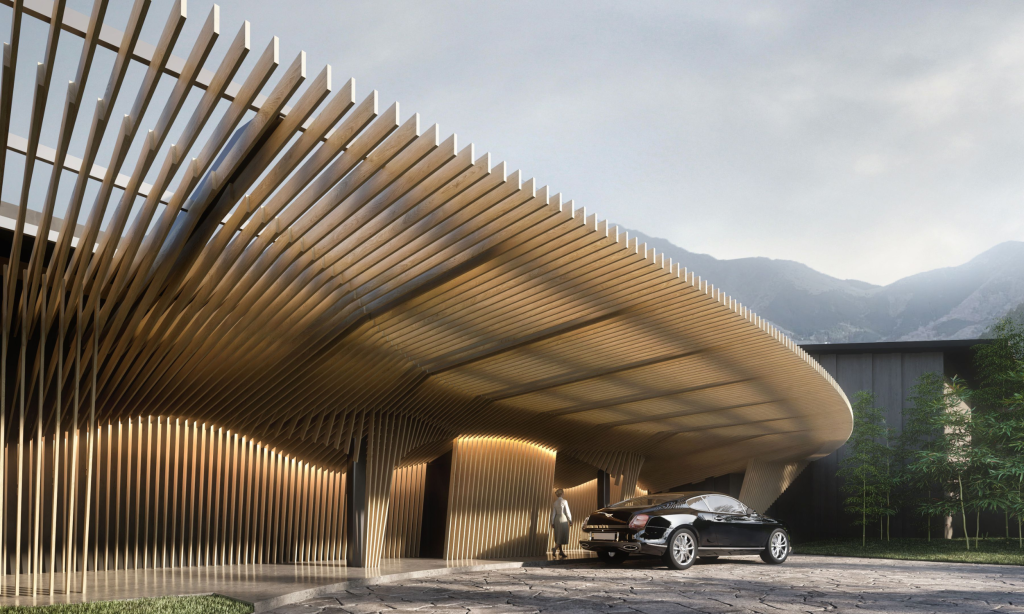
That architectural direction is important for the Alila brand. In recent years, luxury resort development has increasingly moved away from scale and spectacle towards a quieter language of place, privacy and emotional connection. For a market like Japan, where hospitality traditions are already deeply connected to seasonality, ritual and landscape, the challenge will be to create a property that feels both globally recognisable as Alila and locally grounded in Hakone’s own identity.
The inclusion of private natural hot spring baths in every guestroom also signals how the resort intends to adapt Alila’s wellness positioning for Japan. The onsen is not a decorative amenity in this context. It is the centre of the stay experience and one of the main reasons travellers choose Hakone. For Hyatt, the operational test will be to deliver Alila’s international resort language without flattening the cultural specificity of Japanese bathing traditions into a generic wellness product.
Dining at Alila Sengokuhara Hakone is also expected to follow a place-led approach, with the restaurant and bar built around locally sourced ingredients and seasonal menus. This reflects a wider pattern in luxury hospitality, where food and beverage is increasingly used to deepen the relationship between hotel and destination, particularly in resort markets where guests expect the property to serve as both accommodation and cultural gateway.
The project also extends Hyatt’s relationship with Fujita Corporation. Yoji Okumura, President of Fujita Corporation, said the company was honoured to welcome Alila to Sengokuhara and noted its long-standing relationship with Hyatt, including Fujita’s role as owner of Grand Hyatt Seoul and contractor for Park Hyatt Niseko Hanazono. He said the new project would bring together architecture, interior design and landscaping expertise to maximise the value of Sengokuhara’s natural environment.
For Hyatt, the signing adds another layer to its broader Japan growth strategy. The company currently operates 22 hotels across nine brands in the country. The debut of Alila will bring a tenth Hyatt brand to Japan and support the group’s ambition to double its portfolio in the market over the next decade.
The move follows a period of heightened competition among international hotel groups in Japan, where inbound tourism recovery, domestic leisure demand and growing appetite for luxury resort experiences have sharpened interest in destinations beyond Tokyo, Kyoto and Osaka. Hakone’s proximity to major urban centres, established tourism infrastructure and natural wellness credentials make it a logical setting for a brand built around restorative travel.
Alila Sengokuhara Hakone will also strengthen Hyatt’s luxury portfolio in Japan by adding a resort proposition distinct from its existing urban and mountain luxury assets. While brands such as Park Hyatt and Andaz already carry strong recognition in the market, Alila gives Hyatt a different vocabulary: quieter, nature-led, wellness-oriented and closely tied to environmental immersion.
The opening remains two years away, but the strategic direction is clear. Hyatt is not simply adding another luxury hotel to Japan. It is using Alila to enter a resort category where architecture, onsen culture, nature and slow travel converge.
If executed with enough restraint, Alila Sengokuhara Hakone could give Hyatt a compelling foothold in Japan’s next phase of luxury resort growth, one shaped less by excess and more by the careful interpretation of place.