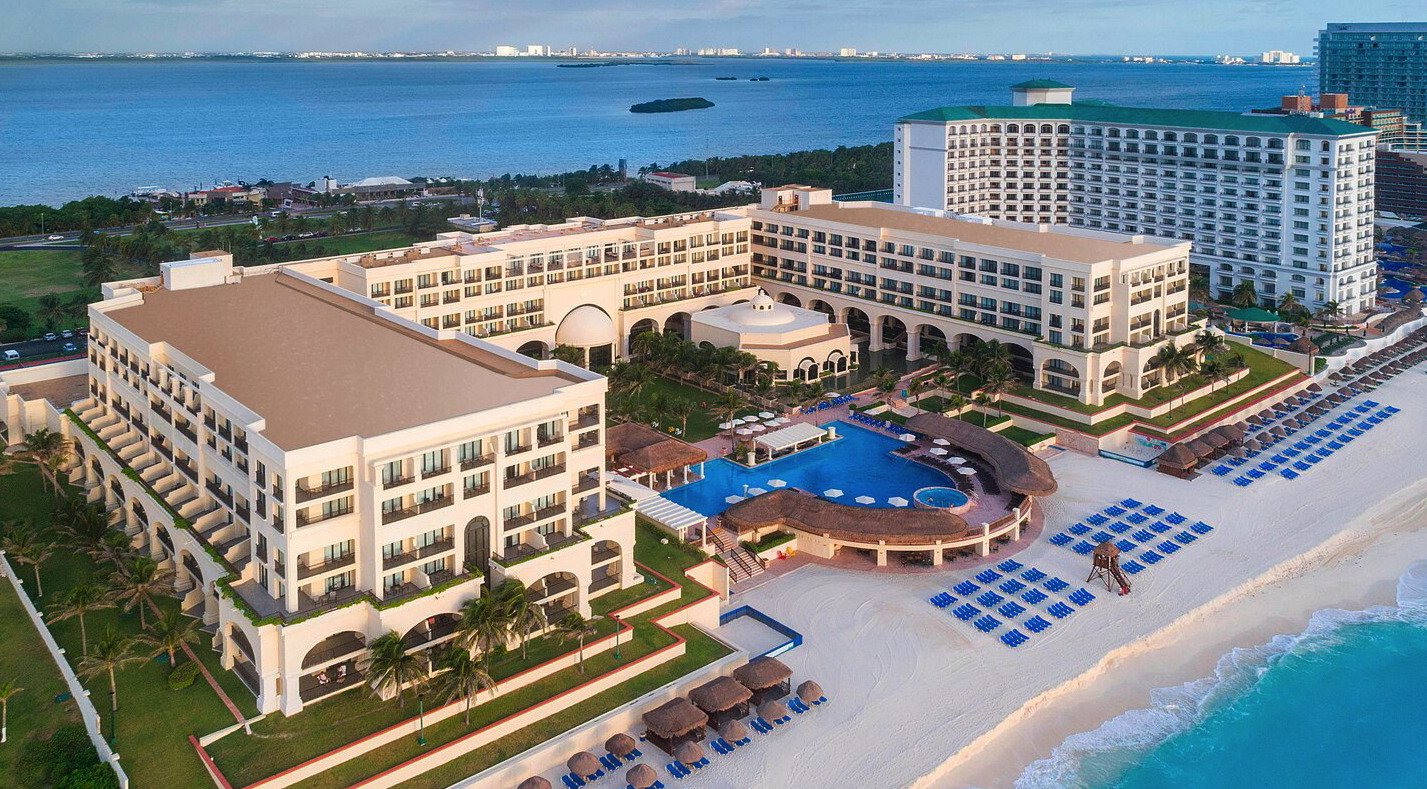
The opening of Courtyard by Marriott Torreón has taken Marriott International to 300 properties in Mexico, while another 76 hotels representing more than 12,000 rooms remain in development.
Marriott International has reached 300 operating properties in Mexico, marking a significant milestone in what has become the company’s largest market in the Caribbean and Latin America.
The 300th property is Courtyard by Marriott Torreón, a new 147-room hotel in Coahuila serving both business and leisure travellers. Its opening takes Marriott’s Mexican portfolio beyond 44,000 rooms across 25 brands.
Mexico now accounts for more than half of Marriott’s open hotels in the Caribbean and Latin America region and close to 40 per cent of the projects currently in its regional development pipeline.
That scale makes Mexico much more than a resort market for the group.
Marriott is expanding simultaneously across luxury resorts, all-inclusive hotels, urban centres, regional business markets and conversion opportunities, giving the company one of the broadest hospitality footprints in the country.
Another 76 hotels in development
As of the end of the second quarter of 2026, Marriott had 76 hotels representing more than 12,000 rooms in its Mexico pipeline.
The company also expects to open more than 10 additional hotels before the end of 2026.
That growth is being driven by several different development models rather than a single segment.
Conversions account for around 35 per cent of Marriott’s signed development pipeline in Mexico, with brands including The Luxury Collection, Autograph Collection and Tribute Portfolio providing owners with options for bringing existing independent properties into the Marriott system.
For hotel owners, conversions can provide a faster route into an international brand than a completely new development, particularly in markets where construction costs and project timelines remain challenging.
For Marriott, they offer a way to expand without relying exclusively on new-build supply.
Luxury continues to grow
At the upper end of the market, Marriott has continued to build its Mexican luxury resort portfolio.
In June, the company opened The St. Regis Costa Mujeres Resort, Cancún, a 163-room beachfront property north of Cancún. The resort sits close to mangroves and the Caribbean reef system and adds another St. Regis destination to Marriott’s growing Mexican luxury network.
The opening reflects the continuing movement of luxury hospitality beyond Mexico’s established resort centres into newer coastal destinations.
Costa Mujeres has become an increasingly important development market as luxury operators look for beachfront locations offering proximity to Cancún while providing a more secluded resort environment.
Marriott’s broader Mexican portfolio already spans brands ranging from The Ritz-Carlton and St. Regis to Luxury Collection, W Hotels, EDITION and JW Marriott.
That breadth allows the company to target different interpretations of luxury rather than relying on a single resort format.
All-inclusive becomes a bigger part of the strategy
All-inclusive is another area where Marriott is expanding quickly.
In May, The Westin Playa Vallarta, an All-Inclusive Resort opened following a conversion, becoming Westin’s first all-inclusive property in Mexico.
The 281-suite property in Puerto Vallarta includes six restaurants, four outdoor dining venues, wellness facilities and a mix of plunge-pool and swim-up accommodation.
The project demonstrates how Marriott is attempting to move the all-inclusive model beyond its traditional format.
Rather than positioning all-inclusive solely around unlimited food and drink, the group is increasingly incorporating wellness, premium dining, meetings, destination experiences and luxury branding.
As of June 2026, Marriott operated 39 all-inclusive properties across nine markets in the Caribbean and Latin America, including resorts in Cancún, Puerto Vallarta, Riviera Nayarit and Los Cabos.
That gives Mexico a central role in the company’s efforts to develop all-inclusive hospitality across several different brands and price points.
Growth beyond the coast
The opening of Courtyard Torreón also illustrates another important part of Marriott’s Mexico strategy.
Torreón is not a traditional international leisure destination.
It is a major industrial and business centre in northern Mexico, giving Marriott exposure to corporate travel, manufacturing, logistics and regional commercial demand.
Courtyard Torreón is located within Plaza Almanara and around 4.7 kilometres from Torreón International Airport. The property includes two dining outlets, meeting space, an outdoor pool and fitness facilities.
Properties such as this balance Marriott’s large coastal resort portfolio with hotels serving Mexico’s industrial and commercial corridors.
That diversification matters because Mexico’s hospitality market is being shaped by several demand sources at once.
International leisure remains important, but domestic travel, corporate mobility, manufacturing investment and infrastructure development are creating hotel demand across cities that historically attracted less attention from global groups.
Mexico becomes Marriott’s regional anchor
Alejandro Acevedo, Regional Vice President of Development for Marriott International in the Caribbean and Latin America, said reaching 300 properties reflected both the strength of Marriott’s brands and the company’s locally led development strategy.
He highlighted conversions, all-inclusive resorts, branded residences and regional business destinations as different routes through which Marriott is continuing to grow in Mexico.
The scale of the Mexican portfolio is particularly striking when viewed against Marriott’s wider regional business.
At the end of Q2 2026, Marriott operated 570 properties and 97,143 rooms across 38 countries and territories in the Caribbean and Latin America, with 202 projects representing almost 31,000 additional rooms in development.
Mexico alone therefore represents more than half of the region’s operating hotel count.
For Marriott, that concentration brings significant opportunity but also makes continued diversification important.
Its future growth in Mexico is unlikely to depend on one destination or one type of traveller.
The pipeline increasingly stretches from luxury coastal resorts and all-inclusive conversions to lifestyle hotels, business properties and hotels serving secondary cities.
That is perhaps the more important story behind the 300-hotel milestone.
Marriott has reached significant scale in Mexico, but the next phase of growth is becoming more varied, with the company using its large brand portfolio to enter different destinations, segments and development models.
With another 76 hotels already in the pipeline, 300 properties increasingly looks less like an end point and more like the foundation for Marriott’s next stage of expansion in the country.