Marriott Doubles Down on Lima with Ritz-Carlton, JW Marriott Conversions by 2028
Marriott International will convert two of its flagship Lima hotels under The Ritz-Carlton and JW Marriott brands by 2028, executing one of the most significant luxury repositionings in Peru's hospitality…
 News Desk
5 min read
News Desk
5 min read
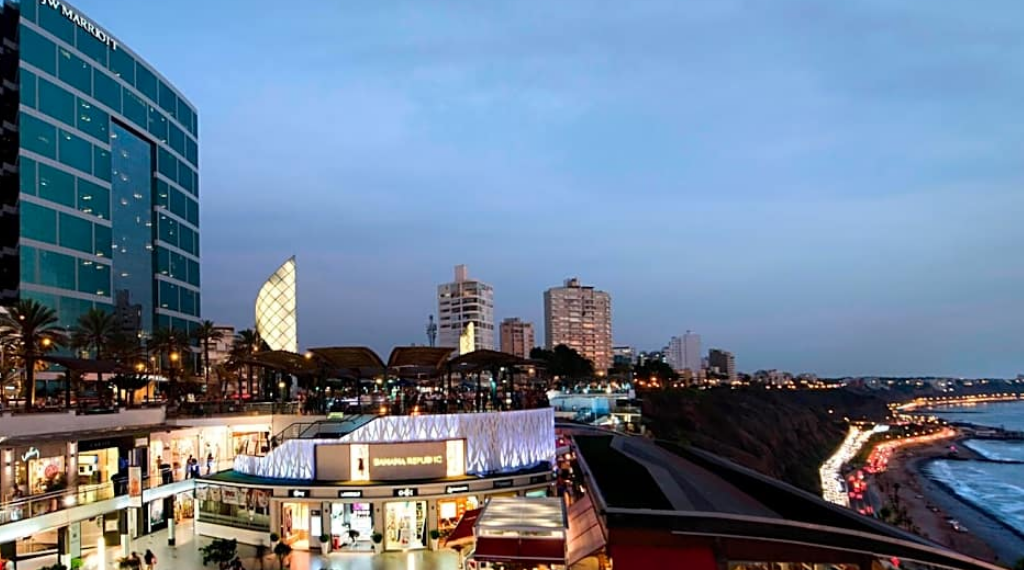
Marriott International will convert two of its flagship Lima hotels under The Ritz-Carlton and JW Marriott brands by 2028, executing one of the most significant luxury repositionings in Peru’s hospitality history and bringing only the second Ritz-Carlton property to South America.
The dual conversion functions as a brand swap in Peru’s capital. The current JW Marriott Hotel Lima in Miraflores will be reflagged as The Ritz-Carlton, Lima, while the former Westin Lima Hotel & Convention Center in San Isidro will reopen as the new JW Marriott Hotel Lima within the Paseo Begonias mixed-use district.
Both properties are scheduled to officially join their new brand portfolios in 2028.
A brand swap with strategic intent
The repositioning addresses two distinct demand segments in Lima. The Ritz-Carlton, Lima will sit in Miraflores, the district most closely associated with Peru’s international leisure and high-end tourism circuit, with its oceanfront cliffs, fine-dining culture and proximity to the city’s cultural attractions.
The new JW Marriott Hotel Lima will anchor the financial district of San Isidro through its Paseo Begonias address, a mixed-use corridor combining premium office space, retail and hospitality that has emerged as Peru’s leading corporate hospitality cluster.
For Marriott, the move sharpens brand architecture within a single market. Ritz-Carlton targets discerning leisure and incentive travellers; JW Marriott captures wellness-led business travel and conventions. By separating the two propositions geographically, the group avoids the brand overlap that has historically created friction in mature urban markets.
Lima’s emergence as a luxury destination
The announcement reflects South America’s broader repositioning within the global luxury landscape. Walter Regidor, Regional Vice President for Central & South America at Marriott International, described the project as ‘a milestone for the evolution of hospitality in Lima’ that reinforces the city’s growing presence on the global travel map.
He added that as travellers look beyond traditional luxury markets, Lima stands out for its ‘cultural richness, culinary leadership and vibrant urban energy’.
The positioning is supported by performance data. STR figures have identified Brazil, Peru and Chile as the strongest-performing hotel markets in the Americas in 2025, with Lima in particular showing sustained gains in luxury and mid-range segments through occupancy and ADR growth.
Peru’s tourism momentum is also being reinforced by infrastructure investment. The expansion of Jorge Chávez International Airport, with its new terminal materially increasing capacity, is reshaping inbound travel patterns and improving connectivity between Lima and core leisure destinations including Cusco, Machu Picchu and the Amazon.
A conversion-led approach
Marriott’s choice of conversion over new build is significant. With construction costs elevated and development timelines stretched, conversions allow the group to introduce flagship brands in prime urban locations without breaking ground or absorbing greenfield risk.
The Ritz-Carlton, Lima will join a regional portfolio of more than 10 hotels spanning Mexico, Costa Rica, Chile and the Caribbean. JW Marriott already operates 17 properties across markets including Brazil, Colombia, Costa Rica, Mexico and Panama.
Marriott’s existing Peru footprint reinforces the strategic logic. The group already operates Tambo del Inka, JW Marriott El Convento Cusco and Palacio del Inka in Cusco, along with Hotel Paracas, each carrying a Luxury Collection or JW Marriott badge.
The two Lima conversions complete a coherent luxury circuit across Peru’s primary tourism corridor, linking Lima’s urban product with the cultural and leisure properties anchoring Cusco and the Sacred Valley.
Competitive landscape intensifies
Marriott is not moving alone. IHG has confirmed plans to introduce InterContinental and Hotel Indigo properties in Lima, while the Tribute Portfolio brand recently expanded into Miraflores through Humano, Lima.
The combined activity suggests Lima is approaching an inflection point typical of emerging luxury capitals: international groups locking in flagship addresses ahead of broader market maturation, with the expectation that demand from both corporate and high-end leisure segments will continue to compound.
Looking ahead
By 2028, Lima will have a meaningfully different luxury hospitality landscape: two new globally recognised flags, expanded competition from IHG, and an airport capable of supporting substantially higher international arrivals.
For Marriott, the project is a clear bet that South America’s luxury growth story is moving beyond São Paulo and Buenos Aires, with Lima positioned as the next capital to absorb top-tier global brands at scale.
The deeper signal is one of confidence in conversion economics: a model that allows established operators to take prime urban inventory, reset brand standards and capture premium positioning without the cost or delay of new development. Expect more of it across the region over the next 24 months.