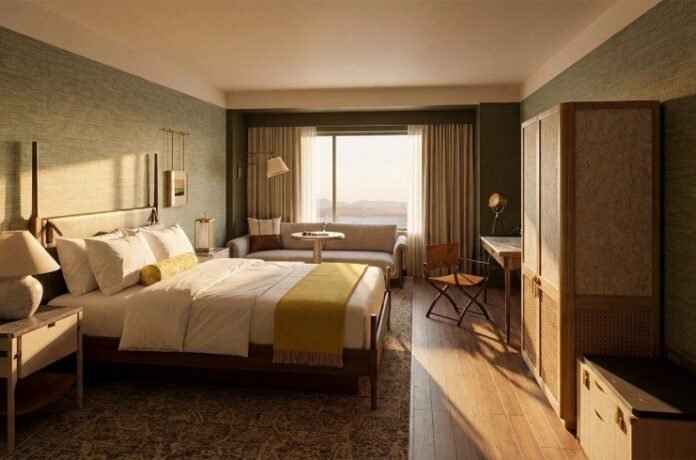
Westport Hospitality will open The Harborvale, Autograph Collection, a 161-room lakeside hotel on Lake Champlain in Burlington, Vermont, in June 2026, repositioning the existing 25 Cherry Street property from Marriott’s Courtyard brand into the group’s upper-upscale Autograph Collection.
The property will be owned by Burlington Harbor Hotel Group, a consortium of local investors, and developed by Jay Canning and Chuck DesLauriers. Westport Hospitality, the Burlington-based operator behind Hotel Vermont since 1998, will run the asset. The Harborvale joins more than 300 independent properties under Autograph Collection globally.
A brand-up conversion in plain sight
The opening is, in strategic terms, a conversion story rather than a new-build narrative. The 25 Cherry Street site previously traded as the Courtyard by Marriott Burlington Harbor, a select-service brand. Its repositioning under Autograph Collection moves the asset up Marriott’s segmentation ladder into the lifestyle and upper-upscale tier, where rate and margin profiles are materially higher.
That kind of within-family brand-up is one of the more nuanced plays in current US hospitality. It allows owners to capture lifestyle-tier pricing power without losing access to the Marriott Bonvoy distribution engine and its more than 200 million members, which underwrites occupancy through cyclical downturns.
Why Autograph fits Burlington
Hans van Wees, Managing Director, Westport Hospitality, framed the positioning as a deliberate departure from a more generic lakeside product. ‘Our vision was to capture the nostalgia of lake life and translate it into a world-class experience’, he said. ‘By joining the Autograph Collection, we’re offering something Burlington hasn’t had before: a refined, independent retreat’.
The pitch reads as a direct response to Burlington’s hospitality competition, which already includes Hotel Champlain Burlington, Curio Collection by Hilton, a comparable soft-brand lakeside property. Both hotels target the same independent-feel, branded-distribution traveller, and both have been built on conversions of older waterfront assets.
For Marriott, the conversion is a textbook example of why its collection brands have outpaced new-build growth. Autograph Collection has more than tripled in size over the past decade and, alongside The Luxury Collection and Tribute Portfolio, has consistently accounted for a meaningful share of Marriott’s global conversion-rooms signed in recent reporting periods.
Function space and F&B reset
The hotel includes three event spaces with floor-to-ceiling windows, more than 3,000 square feet of dedicated function space, and an outdoor terrace overlooking the lake. The venues will support gatherings of up to 125 guests, with a stated emphasis on intimate formats, including microweddings and small corporate meetings.
The food and beverage proposition is being rebuilt from scratch. Executive Chef Doug Paine, who is leading both Westport Hospitality’s culinary programme and the hotel’s restaurant, has described the new outlet as a ‘timeless American restaurant’, replacing the long-running Bleu Northeast Kitchen at the same address. Café, breakfast, lunch, afternoon tea, dinner and a late-night bar are planned, all open to the public.
That seven-day, all-day-parts F&B model is increasingly central to soft-brand economics. Independent-feel hotels need a destination restaurant that pulls non-residents into the property, both to support food and beverage margin and to bake the lifestyle positioning into local market perception.
What this signals for owners
For independent and locally owned hotel groups, The Harborvale is a useful case study in how to access global distribution without surrendering identity. The Burlington Harbor Hotel Group structure preserves local ownership, while Autograph Collection unlocks Marriott’s loyalty base and rate ceiling.
On the talent and operating side, the brand-up creates immediate pressure on the leadership and service-team profile. Lifestyle and upper-upscale standards demand a step-change in personalisation, F&B craft and front-of-house experience compared with a Courtyard select-service operation, and recruitment will need to follow.
With the hotel opening in June 2026 and the restaurant soft-launching ahead of that, the next 12 months will determine whether the conversion delivers on its lifestyle promise or settles into a comfortable mid-market identity. The Burlington luxury experiment, in that sense, is only just beginning.