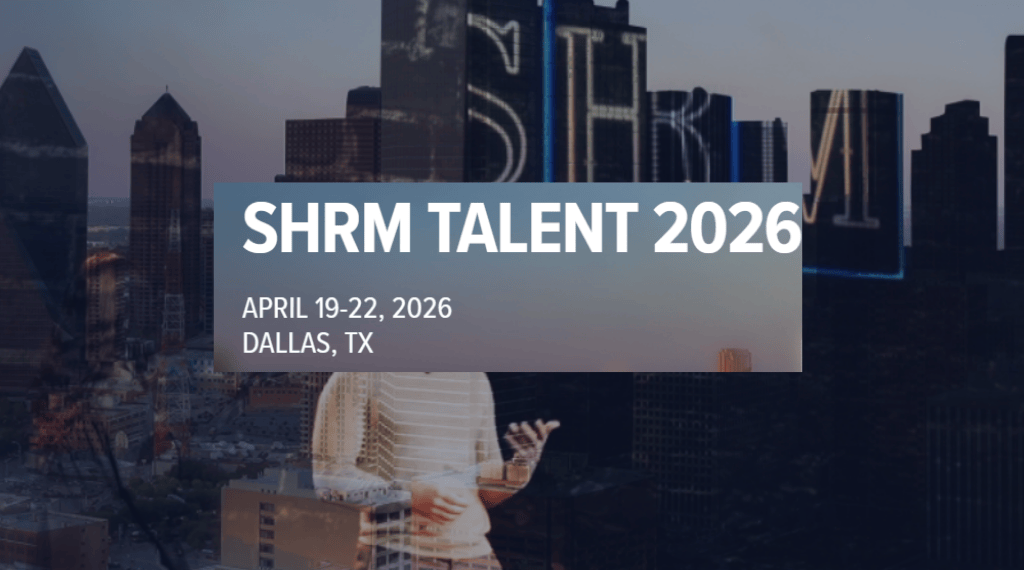
As the global hospitality industry grapples with annual staff turnover rates of 70 to 80%, one of the sector’s most experienced people leaders is stepping into a national spotlight. Joy Rothschild, Chief Human Resources Officer of Omni Hotels & Resorts, will take the main stage at SHRM Talent 2026, opening in Dallas, Texas, on 19 April, to address how hospitality organisations can build loyalty, close skills gaps and retain talent in one of the most structurally challenging labour markets any industry has faced in modern times.
SHRM Talent 2026, running from 19 to 22 April at the Gaylord Texan Resort & Convention Center, is the Society for Human Resource Management’s flagship annual conference for talent acquisition and HR strategy. With 85-plus educational sessions, an expected attendance of 1,200 to 1,500 senior professionals and more than 90 exhibiting organisations on the expo floor, the event sets the agenda for workforce priorities in the months ahead.
Rothschild will appear on a main stage panel titled ‘The Talent Pressure Test: What HR Leaders at America’s Largest Employers Are Doing Right Now’, moderated by Jim Link, CHRO of SHRM. She joins Mary Beth DeNooyer, CHRO of Keurig Dr Pepper, and Njsane Courtney, Vice President of Human Resources at the American Bureau of Shipping.
Why Rothschild’s voice matters for hospitality
With more than 25 years of HR leadership at Omni, Rothschild is among the longest-serving people executives in the global hotel industry. Her presence on a cross-sector panel of this profile is notable: hospitality is rarely held up alongside financial services or consumer goods as a model for workforce strategy, yet the challenges it faces are arguably the most acute of any major employment sector.
The numbers frame the stakes clearly. The hospitality industry currently experiences annual turnover of 70 to 80%, with housekeeping roles seeing attrition of up to 55% within the first 90 days of hire. Losing a single employee costs operators more than $5,000 on average in recruiting, training and lost productivity. The World Travel & Tourism Council has projected a global hospitality workforce shortfall of 8.6 million workers, roughly 18% below required staffing levels, by 2035.
Wages have risen sharply, from $16.84 to $22.70 on average between 2020 and early 2025, yet turnover has not stabilised to match. Compensation alone is not solving the problem.
The ‘All In’ model: building culture after collapse
Rothschild’s approach at Omni offers a case study that goes beyond conventional HR strategy. In 2021, Omni was rebuilding after the pandemic reduced its workforce from approximately 22,000 associates to fewer than 1,800. Faced with rapid rehiring of tens of thousands of people who had no prior experience with the brand, Rothschild led the development of Omni’s ‘All In’ philosophy: a company-wide culture framework built on the principle that the organisation and its people succeed together or not at all.
The philosophy produced measurable results. Omni’s diversity and inclusion rating on Glassdoor reached 4.4 out of 5, surpassing many competing hospitality brands. The company’s internal All In Ambassadors newsletter now records the highest open rate of any internal communication across the organisation.
Central to Omni’s people strategy is the Omni Circle foundation, which Rothschild established to provide financial grants to associates experiencing major hardship. The programme has distributed more than $7 million in grants since its founding, covering situations from house fires to emergency travel. It represents a form of workforce investment that sits outside conventional compensation or benefits structures, and one that Rothschild has described as the company’s most impactful cultural initiative.
What the sector needs to hear
The SHRM panel focuses on what large employers are doing right now to stabilise workforces, rebuild trust and deliver measurable results under sustained pressure. For hospitality HR directors and senior leaders, Rothschild’s participation offers a rare opportunity to see the sector’s challenges framed within a broader cross-industry conversation about talent.
The wider context reinforces why this matters. Hospitality remains among the most labour-intensive and retention-sensitive industries in the global economy. The AHLA projects an 18% labour shortfall in 2026, with the most acute gaps in housekeeping, front-of-house and culinary roles. Fewer young workers are entering the sector, driven by perceptions of unsociable hours, limited career progression and comparatively lower wages than technology, finance and professional services.
Research from Gallup indicates that only 31% of hospitality employees report being fully engaged in their work. The retention problem, in other words, is not simply a supply issue. It is a culture and leadership challenge.
The broader conference agenda
SHRM Talent 2026 is designed specifically around the full talent lifecycle, from sourcing and hiring through onboarding and long-term retention. Sessions cover AI-driven talent acquisition, skills-based hiring models, candidate experience and workforce planning. For hospitality leaders attending or following coverage of the event, the conference represents a window into practices being deployed by some of the world’s largest employers, many of which are directly applicable to hotel, resort and F&B operations at scale.
The conference is also available for virtual attendance, with session recordings accessible for 30 days post-event, making its content accessible to HR leaders unable to be present in Dallas.