Marianne Albalkhi and the work behind Aman’s service culture
Aman’s regional HR leader offers a lens on how luxury operators develop staff across markets without imposing one model on every hotel.
 Sarah Shaw
4 min read
Marianne Albalkhi has a remit that spans very different luxury hospitality markets. In her own announcement, she confirmed joining Aman as Regional Director of Human Resources for EMEA and the Americas. A recent VELORIA Global profile, which she shared, highlights her regional experience. It is recognition of an existing role, not a new appointment or an industry award.
What Marianne Albalkhi’s remit brings into focus
The profile places Albalkhi in Dubai and cites previous leadership roles at Ennismore, Sofitel Dubai The Obelisk and Fairmont Empress. Her own account documents a 2024 Ennismore People & Culture gathering for colleagues from the Middle East, Southern Europe and Central Asia. That earlier example points to an enduring feature of hotel HR: people who report through the same organisation may need quite different support in their day-to-day work.
Across a luxury portfolio, the work can look deceptively uniform in a corporate handbook. Every property recruits, trains, appraises and promotes people. Yet hiring for a remote resort may require thinking about staff transport and housing alongside the role itself. An urban hotel has a different labour pool and faces competitors a short commute away. A common policy can provide direction, but the manager who applies it needs to understand what makes a role sustainable in that location.
Give the front line judgement, not just a script
Personalised service is often described as the opposite of standardisation. In practice the two depend on each other. Staff can adapt a response confidently when they know which information may be shared, when a colleague needs to take over and what decisions can be made without another layer of approval. A good standard protects the guest and the employee, then leaves space for judgement where it will improve the outcome.
Regional HR can help articulate that distinction. It can set common expectations for manager training and fair decision-making, and help each hotel identify the situations staff need to practise. A training exercise might ask what a receptionist can do when a late arrival changes an agreed transfer, or how a colleague should escalate an inappropriate request. The exact answer may vary across the operation; knowing who has authority and how to hand over the decision should not.
Measure the conditions that make service possible
The expansion plans on Aman’s development page span settings including Dubai, the Americas and Saudi Arabia. These are published plans, not an indication that every project is open or that any particular property reports to Albalkhi. They do, however, illustrate why an operator needs more than one route to build a management team. A new property may rely on internal transfers initially. It also needs local hires to see a path into supervisory jobs once the opening team has moved on.
Three useful questions follow. How many supervisors have been developed inside each hotel, rather than recruited to solve an immediate vacancy? Do colleagues who move between properties have enough local induction to succeed? And do junior staff know how to raise an issue even if their own manager is involved? Together, those questions expose weaknesses that a guest survey or annual headcount does not.
Opening support is another decision that lends itself to measurement. A group can track how long visiting trainers stay, which roles still rely on temporary support when they leave, and whether local managers can run the same training for new starters. That gives a better view of readiness than the number of induction sessions delivered.
WINC Wire’s analysis of what a luxury hotel sells focuses on what happens when a stay does not go to plan. Look at the same moment from the staff side and the job comes into sharper focus. The guest sees the response; the colleague draws on the authority, training and support already in place. A regional people team cannot dictate every outcome from a distance. It can make sure a property has the people and the framework to handle those moments well.
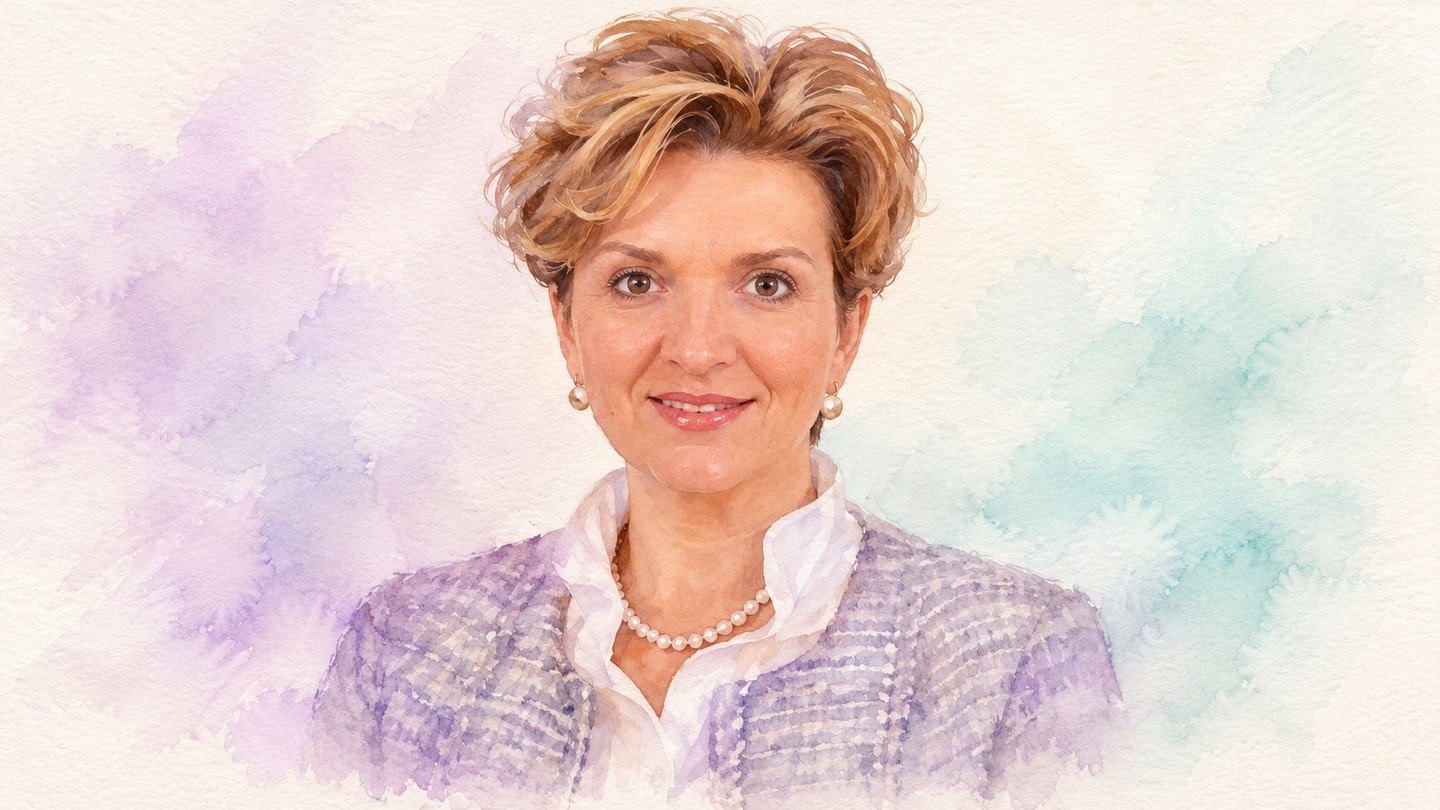
Portrait: AI-generated watercolour illustration by WINC Wire, based on a published portrait of Marianne Albalkhi. Reference portrait.
Related on WINC Wire: how Four Seasons balances city and resort operations across a regional portfolio.