

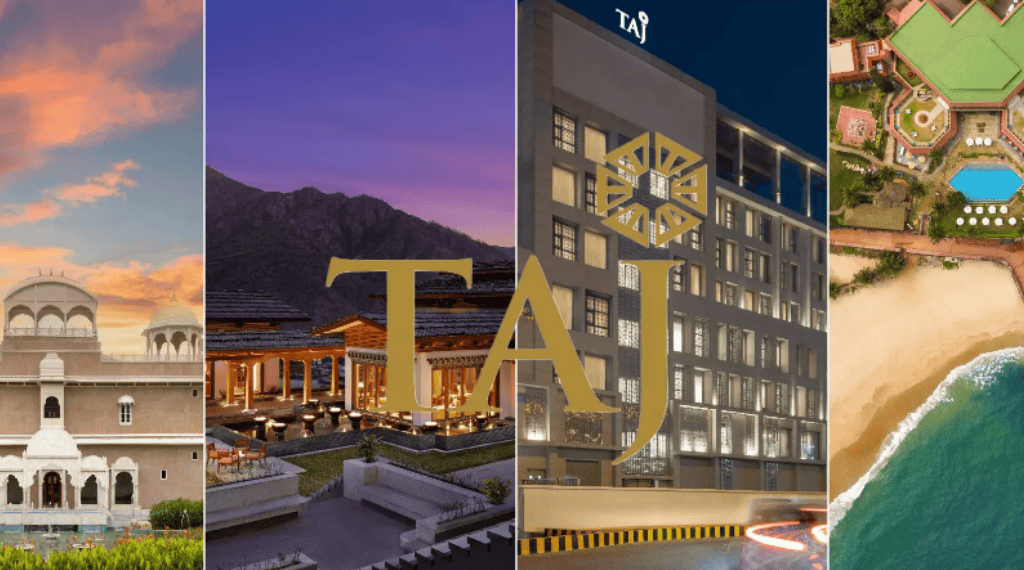

The Indian Hotels Company (IHCL) has signed a new Taj hotel in Mohali, Punjab, marking a strategic push into one of northern India’s fastest-growing commercial corridors. The greenfield project will deliver 225 rooms and the region’s largest banqueting space, positioning IHCL to capture demand from business travellers and the lucrative wedding market.
The signing brings IHCL’s Punjab portfolio to 14 hotels, with seven currently under development. For the Tata Group hospitality arm, which operates the world’s strongest hotel brand according to Brand Finance, Mohali represents a deliberate bet on Punjab’s transformation from agricultural heartland to technology and services hub.
Suma Venkatesh, Executive Vice President for Real Estate and Development at IHCL, framed the decision in market terms. Mohali’s emergence as a thriving IT and commercial centre makes it a key growth market in Punjab, she said, adding that the state’s increasing appeal as a destination for weddings and social events aligns with IHCL’s expansion strategy in high-potential markets.
The planned property will feature an all-day dining restaurant, bar and specialty restaurant alongside wellness facilities including Taj’s signature J Wellness Circle spa concept. A swimming pool, gymnasium and health club complete the leisure offering.
Most significantly, the hotel will include more than 26,000 square feet of banqueting space – described as the largest event venue in the region. This positions Taj Mohali squarely at the intersection of two powerful demand drivers: corporate functions from the city’s growing technology sector and the substantial wedding market that has made Punjab a favoured destination for celebrations.
Mohali’s commercial transformation
The city’s trajectory supports IHCL’s investment thesis. Once a quiet residential extension of Chandigarh, Mohali has attracted record investment in recent years. Major technology firms including Infosys have expanded operations there, with the software giant committing over ₹285 crore to its local campus.
Infrastructure development is accelerating in parallel. The Greater Mohali Area Development Authority continues work on a 1,700-acre IT City project, whilst the central government has announced plans to invest ₹4,500 crore to modernise and expand the Semi-Conductor Laboratory facility. A ₹443-crore broad-gauge rail link to Rajpura is moving forward, improving regional connectivity.
The city sits within the Chandigarh Tricity area, benefiting from proximity to an international airport and the administrative capital’s established infrastructure. Technology companies have invested over ₹2,000 crore in the IT City alone, with an additional ₹3,000 crore in the pipeline according to the Mohali IT City Association.
Wedding market opportunity
India’s destination wedding sector has expanded rapidly, valued at approximately $16 billion in 2024 and projected to reach $55 billion by 2033 according to Grand View Research. Punjab has emerged as a preferred location, combining cultural significance with accessible venues and strong transport links.
The scale of the opportunity is substantial. The Confederation of All India Traders estimates India will host roughly 4.8 million weddings between November 2024 and March 2025, generating economic activity worth trillions of rupees. Average destination wedding spending significantly exceeds traditional ceremonies, with couples typically investing around ₹51 lakh compared to ₹29–36 lakh for hometown celebrations.
For IHCL, banqueting revenue represents a reliable income stream less susceptible to corporate travel fluctuations. Taj Mohali’s 26,000-square-foot events space positions the property to host large-format weddings and social gatherings that drive multi-day bookings and substantial food and beverage revenue.
IHCL’s expansion momentum
The Mohali signing forms part of IHCL’s broader Accelerate 2030 strategy, which targets a 700-hotel portfolio by the end of the decade. The company currently operates more than 250 hotels across India with approximately 25,500 rooms, having signed 46 new properties and opened 26 in the first half of fiscal 2026.
A capital-light approach underpins the expansion. Over 95% of recent signings have been management contracts rather than owned properties, reducing capital requirements whilst building scale. IHCL has also pursued acquisitions, notably the Clarks portfolio of 135 hotels that will primarily strengthen the mid-market Ginger brand.
The Taj brand itself continues to command premium positioning. Brand Finance named it the world’s strongest hotel brand for the fourth time in its Hotels 50 2025 report, with a Brand Strength Index score of 92.2 out of 100. The brand achieved perfect scores for knowledge and selection metrics in its home market, with 97% awareness and 91% familiarity among Indian consumers.
Punjab represents a meaningful regional cluster for IHCL. The 14-hotel footprint following the Mohali signing provides operational efficiencies and brand visibility across a state with nearly 30 million residents and growing commercial activity.
Strategic positioning
Taj Mohali will offer guests uninterrupted views of surrounding greenery, according to IHCL’s announcement. The property’s location in a planned city known for modern infrastructure provides accessibility advantages, whilst the greenfield development allows purpose-built facilities rather than renovation compromises.
For business travellers, the hotel will serve Mohali’s expanding corporate base. The city hosts IT firms, educational institutions and healthcare providers, generating consistent demand for quality accommodation and meeting facilities.
The wedding and social events segment offers higher-margin opportunities. Large celebrations typically involve multiple bookings across rooms, restaurants and banqueting spaces, with extended stays for out-of-town guests. Taj’s reputation for service and the property’s scale position it to compete for premium events.
IHCL has not disclosed the opening timeline or investment value for Taj Mohali. As a greenfield project, construction will precede operations, though the company’s recent track record suggests disciplined execution of development commitments.


