

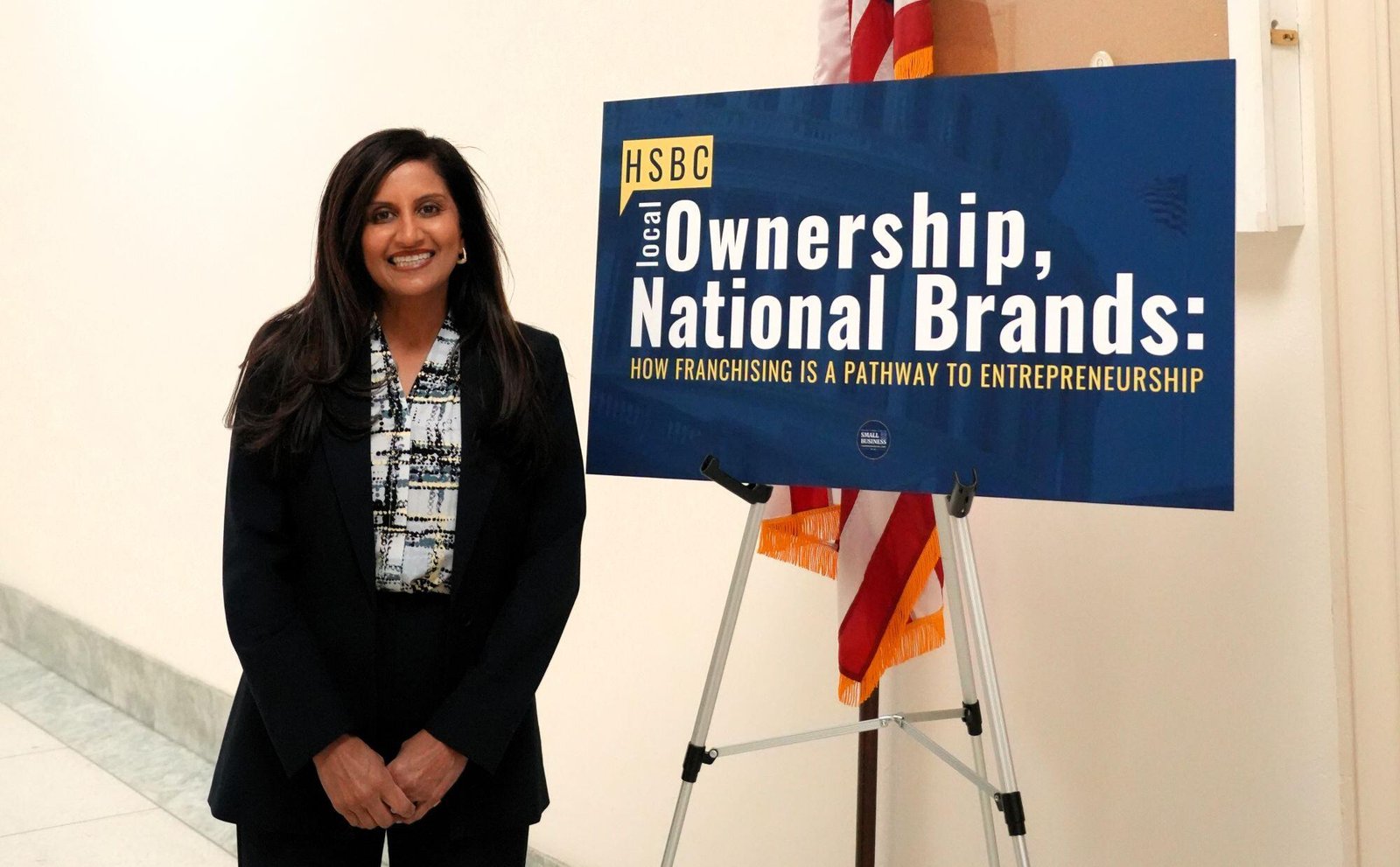

Oklahoma-based hotelier Tina Patel testified before the U.S. House Small Business Committee this week, calling on lawmakers to pass legislation that would provide regulatory certainty for the thousands of small business owners who operate franchised hotels across the United States.
Patel, co-principal and chief financial officer of Promise Hotels, appeared at a hearing titled “Local Ownership, National Brands: How Franchising Is a Pathway to Entrepreneurship” on 22 January. The testimony comes as the industry lobbies for the American Franchise Act, a bipartisan bill that would establish a permanent definition of joint employer status under federal labour law.
The hotel industry’s advocacy reflects broader concerns about regulatory uncertainty that has plagued franchise businesses for the past decade. Shifting interpretations of when a franchisor can be held liable as a joint employer of a franchisee’s workers have created confusion for small business owners planning hiring decisions, securing financing and expanding their operations.
Franchising as small business pathway
Patel’s company exemplifies the franchise model’s potential. Promise Hotels is a family-owned business in Tulsa, Oklahoma, operating seven hotels with 713 rooms and employing more than 165 staff members. The company holds franchise licences with major brands including Hilton, Hyatt, InterContinental Hotels Group and Wyndham.
She and her husband Pete founded the business in 1997 with a single Best Western in Sand Springs, Oklahoma. Both grew up in hotel families – Tina’s immigrated from the United Kingdom to Missouri in 1979, while Pete’s came from India to Oklahoma that same year.
“Franchising works because it is a true partnership and small business owners stay in the driver’s seat,” Patel told the committee. “Our team, guests and community benefit when franchisees have the clarity and stability to focus on running great hotels.”
The hearing brought together franchise owners from various industries to highlight how local entrepreneurs take risks, create jobs and invest in their communities while operating under established brand standards.
Legislative push for stability
The American Franchise Act, introduced as H.R. 5267 in September 2025 by Representative Kevin Hern of Oklahoma and Representative Don Davis of North Carolina, would amend both the National Labor Relations Act and the Fair Labor Standards Act to clarify joint employer standards.
Under the proposed legislation, a franchisor would be considered a joint employer only if it exercises “substantial direct and immediate control” over essential employment terms – including wages, hours, hiring and discipline – of a franchisee’s employees. The bill defines this as control that has a “regular or continuous consequential effect” rather than sporadic or isolated involvement.
A Senate companion bill was introduced in December by Senators Roger Marshall of Kansas and Angus King of Maine.
The legislation has attracted support from industry groups including the International Franchise Association, the Asian American Hotel Owners Association and the American Hotel & Lodging Association.
Economic stakes for hospitality
The hotel franchise sector represents a substantial portion of the American lodging industry. Franchised hotels account for approximately 57 per cent of all U.S. hotels, supporting an estimated 2.8 million jobs, according to AHLA. The number of franchised hotels has grown by 34 per cent over the past decade.
Across all industries, franchise businesses generated approximately $825 billion in economic output in 2022 and employed roughly 8.4 million workers – about 5 per cent of the American workforce, according to Oxford Economics research conducted for the International Franchise Association.
Rosanna Maietta, AHLA president and chief executive, said the franchise model has enabled entrepreneurs to build businesses with brand support, including marketing, operational standards, training and loyalty programmes that drive customer demand.
“Franchising is a pathway to the American Dream for many hoteliers,” Maietta said. “We encourage Congress to pass the bipartisan AFA, which will safeguard the hotel franchise model that supports nearly 3 million jobs nationwide and creates economic opportunity in communities across the country.”
Joint employer uncertainty
The joint employer standard determines when two entities share legal responsibility as employers of the same workers. For franchise businesses, an expanded definition could make brand companies liable for labour violations at independently owned franchised locations.
The National Labor Relations Board has changed its interpretation of joint employer rules multiple times in recent years. The legislation aims to codify a narrower standard, providing what sponsors describe as consistency for both franchisors and franchisees.
Committee Chairman Roger Williams noted that President Trump’s tax legislation, signed into law last year, made the 20 per cent small business deduction permanent and cut taxes on tips and overtime – provisions the committee expects will benefit franchise businesses and their employees.
“By lowering taxes, reducing regulations and promoting access to capital, we can empower these entrepreneurs to thrive, invest in their employees and continue building stronger communities across our nation,” Williams said in his opening statement.
The hearing represents the committee’s second examination of the franchise model in the current Congress. With companion legislation now pending in both chambers, industry advocates anticipate continued momentum toward passage.


