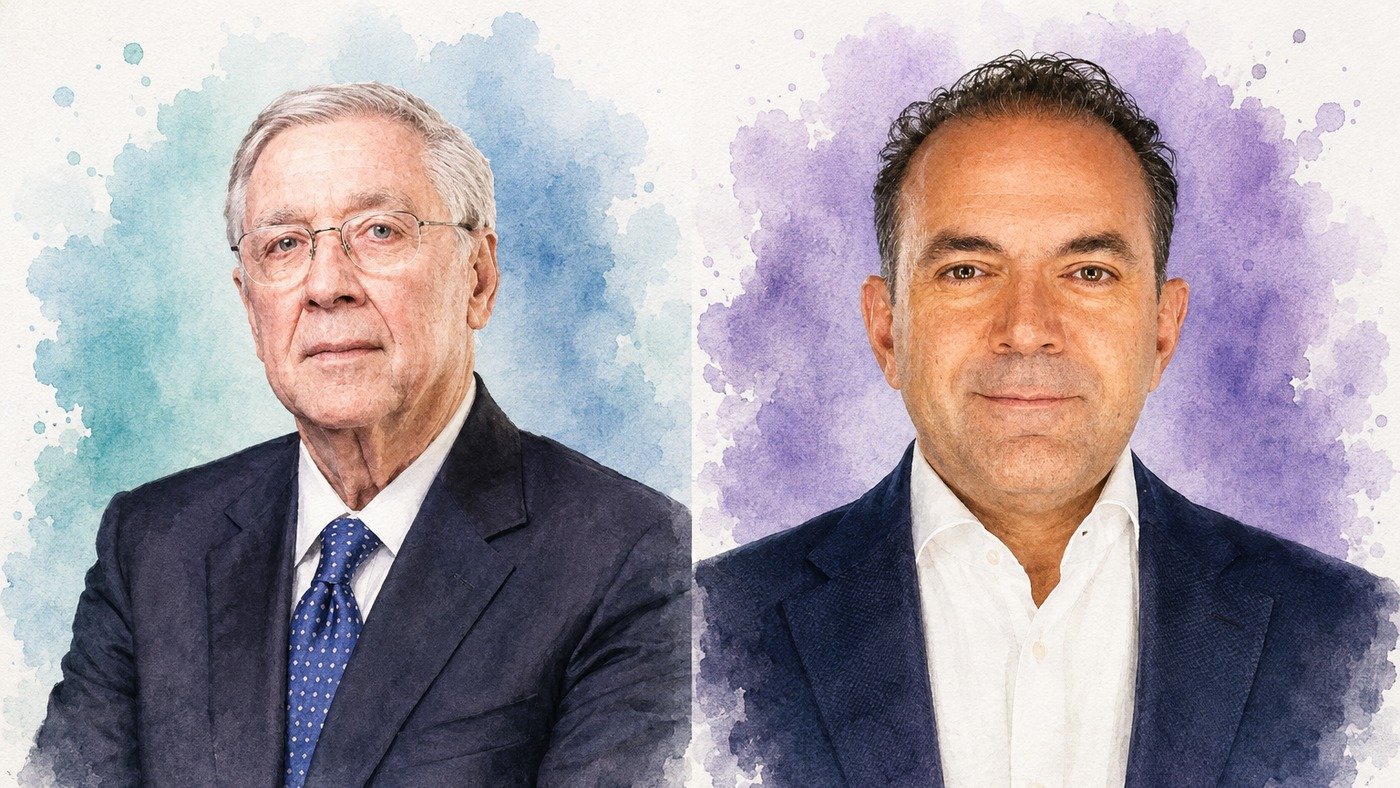
Winnow has formed a new Advisory Board with the appointment of two senior hospitality executives, Paul Whetsell and Gregory Maliassas, as the AI food waste technology company looks to deepen its reach across hotel and resort portfolios globally.
The move brings operator-side experience into Winnow’s next phase of growth. Whetsell is Chief Executive Officer of CapStar Hotel Company, while Maliassas is Chief Executive Officer of Driftwood Hospitality Management. Both executives join the Advisory Board as Winnow works to expand adoption of its food waste measurement technology across large-scale hospitality operators.
The appointment is significant because food waste is moving from a sustainability conversation into a more serious operational and financial issue for hotels. For years, many kitchens have treated waste as an unavoidable cost of buffets, banquets, breakfast service and resort operations. AI-enabled measurement is changing that by giving chefs, finance teams and sustainability leaders clearer visibility into what is being wasted, when it is being wasted and why.
Winnow’s Advisory Board has been established to support the company’s product development and go-to-market strategy as it scales across hospitality. The company is already used by major hospitality brands including Hilton, Marriott and Accor, and has positioned its technology around helping kitchens use data to reduce avoidable waste.
Whetsell brings more than 45 years of hospitality experience. He founded the original CapStar Hotel Company in 1987 and has held senior leadership roles including Chairman and Chief Executive Officer of Interstate Hotels & Resorts and President and Chief Executive Officer of Loews Hotels & Resorts. He also currently serves as a non-executive director on the boards of Boyd Gaming Corporation and Hilton Grand Vacations.
Maliassas brings three decades of international hospitality leadership experience, with particular depth in resort and all-inclusive operations. He was announced as Chief Executive Officer of Driftwood Hospitality Management in April 2026. Earlier, as Chief Operating Officer of Playa Hotels & Resorts, he oversaw branded all-inclusive properties across the Caribbean and Mexico in partnership with companies including Marriott, Hyatt, IHG, Hilton and Wyndham. His previous roles also include senior positions with Accor across luxury brands such as Raffles, Fairmont and Sofitel.
That experience matters because food waste technology only succeeds when it fits the reality of hotel operations. A kitchen platform cannot be designed only from a sustainability desk. It has to work in the flow of breakfast buffets, banqueting, all-inclusive resorts, multiple kitchens, labour constraints, chef routines, procurement cycles and guest expectations. The addition of leaders with deep hotel operating experience suggests Winnow is trying to strengthen the link between technology design and property-level adoption.
For hotel groups, the value of food waste reduction is no longer limited to environmental reporting. It affects food cost, margin protection, procurement planning, kitchen productivity and brand reputation. Rising input costs have made waste more visible on the profit and loss account, while sustainability targets have made it more visible in boardrooms. In that context, reducing waste becomes a commercial discipline as much as a climate goal.
Winnow says clients using its technology across more than 3,500 kitchens globally prevent more than $100 million in food waste each year and avoid 122,000 tonnes of CO2e. The company has set a wider ambition of helping the hospitality industry prevent more than $1 billion in food waste. Those figures explain why the Advisory Board is strategically important. The next challenge is not only proving that the technology works in individual kitchens, but helping large hotel groups deploy it consistently across brands, regions and operating models.
The resort segment is likely to be a particular focus. Winnow has identified resorts and all-inclusive properties as high-waste environments because of buffet expectations, multiple kitchens and the need to maintain abundance throughout service. For operators, the difficulty is to reduce waste without damaging the guest experience. Guests must still feel choice, generosity and quality, even as kitchens become more disciplined behind the scenes.
This is where better data can change behaviour. When kitchens can see which dishes are repeatedly overproduced, which service periods generate the highest waste and how much waste is linked to production rather than plate returns, decisions become more precise. The goal is not to make hospitality feel less generous. It is to remove avoidable waste from the system without weakening the guest proposition.
Winnow’s recent activity also points to a broader expansion strategy. The company has acquired Singapore-based Lumitics, an Asia-Pacific food waste technology player with deployments across more than 20 countries in the region and the Middle East. That acquisition gives Winnow deeper regional reach and adds another layer to its ambition to scale across global hospitality markets.
For hotel owners and operators, the formation of the Advisory Board is a signal that food waste technology is maturing. The sector is moving beyond pilots and individual-property case studies towards portfolio-level implementation. That requires a different kind of support: integration with brand standards, regional operating structures, procurement systems, owner expectations and property team behaviour.
The challenge will be adoption. Hotels are full of technologies that look convincing in presentations but fail because they add work, create friction or do not fit the rhythm of operations. For Winnow, the presence of senior operators on the Advisory Board could help ensure its systems remain practical for kitchens, not just attractive to corporate sustainability teams.
Food waste has always been a hidden cost in hospitality. What is changing is that it is becoming measurable. Once it is measured, it becomes harder to ignore.
For Winnow, the new Advisory Board gives the company access to hotel leadership experience at a time when AI, sustainability and operational efficiency are converging. For the wider hospitality sector, it is another sign that kitchen waste is no longer a back-of-house issue. It is becoming a boardroom issue.