

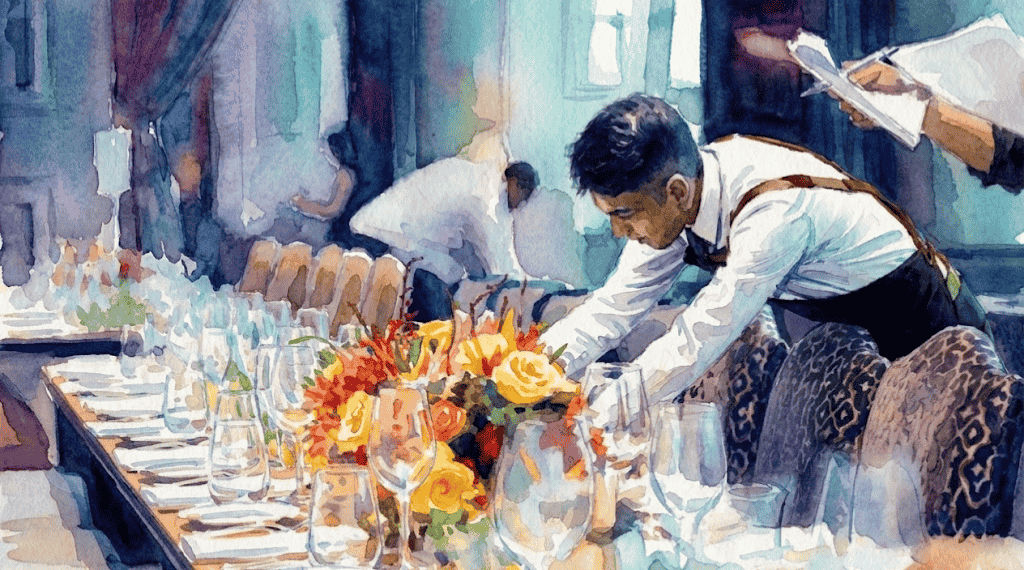

As the industry enters 2026, a fundamental tension is emerging in boardrooms and HR offices across the sector: is technology being deployed to serve people, or to replace them?
The question is not new. But the stakes have never been higher.
I was reading an article by Alan Young on Hospitality Net recently, and it prompted a thought that has stayed with me since. When algorithms make decisions about loyalty, service and guest relationships without human oversight, something essential risks being lost.
When did loyalty become so transactional? And when did we decide that the human story offered less value than the data point?
The automation trap
Agentic AI will dominate hospitality conversations over the next twelve months. Its adoption curve will continue rising, and predictions about its benefits – some thoughtful, some wildly optimistic – will multiply across every industry conference and trade publication.
The technology will undoubtedly help hotels automate decisions, orchestrate systems, surface insights and remove friction from operations. That much is inevitable.
What remains far less certain is how the industry chooses to deploy it.
Automation increasingly enters hospitality conversations not as an enabler of better service, but as a replacement for it. Hotels have leaned into technology with a singular goal: operationalising as much as possible while reducing costs.
The risk is losing what hospitality was built on – the moment when a guest feels genuinely seen, understood and cared for.
What the research shows
PwC’s Future of Customer Experience research found that 82% of American consumers want more human interaction in customer service, not less. People engage with apps, self-service checkouts and chatbots happily enough for routine tasks. But the moment a problem arises, they want to speak to a person.
Hotel Tech Report’s 2025 State of Hotel Guest Technology survey revealed similar patterns. While the majority of guests acknowledge AI improves their hotel experience, most prefer human interaction for complex requests. Chatbots work well for wifi passwords and wake-up calls. They fall short when guests need genuine problem-solving or empathetic service recovery.
The Mews 2026 Hospitality Industry Outlook positions this year as a critical inflection point. Their research draws on input from eighteen industry experts across hospitality, technology, investment, consulting and media. The consensus is clear: AI will compress the guest journey from search to stay, shift a large share of operational work to agents, and sharply raise expectations of what personalised service means.
Human staff, Mews suggests, will be left to do what algorithms cannot: create emotional, high-impact moments.
The strategic choice for workforce leaders
This presents HR and people leaders with a profound decision. Do we view frontline employees as cost centres to be minimised through automation? Or as strategic advantages to be developed and empowered?
The evidence suggests the latter approach delivers better outcomes.
McKinsey’s analysis of Agentic AI in travel and hospitality highlights that automation can free frontline employees to focus on empathetic, human-to-human interactions during critical moments – rebooking during travel disruptions, handling complex guest requests, recovering service failures.
The distinction is whether technology serves staff or replaces them.
The Mews report frames staff evolution clearly: transactional processes such as check-in, payments and routine questions are likely to be increasingly automated. Leading hotels will redesign roles around soft skills, empathy and brand storytelling – not administration.
The loyalty warning
When algorithms and automation take over entirely, removing human judgment from the equation, the essence of service begins to erode.
Hotels may gain efficiency. But they risk sacrificing long-term loyalty.
Guests remember service recovery moments more vividly than smooth transactions. A staff member who notices distress and responds with genuine care creates advocates. An automated response that ignores context creates detractors.
When technology makes decisions without human oversight – when systems cannot account for context, history or exceptional circumstances – trust erodes quietly but persistently.
PwC’s research reinforces this point. The majority of consumers feel companies have lost touch with the human element of customer experience. The gap between what customers expect and what employees deliver remains significant.
Questions for leaders
As workforce strategies take shape for 2026, several questions deserve attention:
Are technology investments designed to enhance employee capability or eliminate employee roles?
Do systems allow for human judgment in loyalty and service recovery decisions, or do algorithms have final authority?
When technology fails or produces unexpected outcomes, do guests have immediate access to empowered staff who can resolve issues?
Are the right outcomes being measured – not just operational efficiency, but guest advocacy, repeat bookings and lifetime value?
The choice ahead
The question for 2026 is not whether technology will transform hospitality. It will. Agentic AI will automate decisions, orchestrate systems and reshape operations across the sector.
The question is whether the industry allows technology to redefine what hospitality means, or uses it to protect and elevate what hospitality has always been about: people serving people, exceptionally well.
For HR and workforce leaders, that choice has never been more consequential.


