

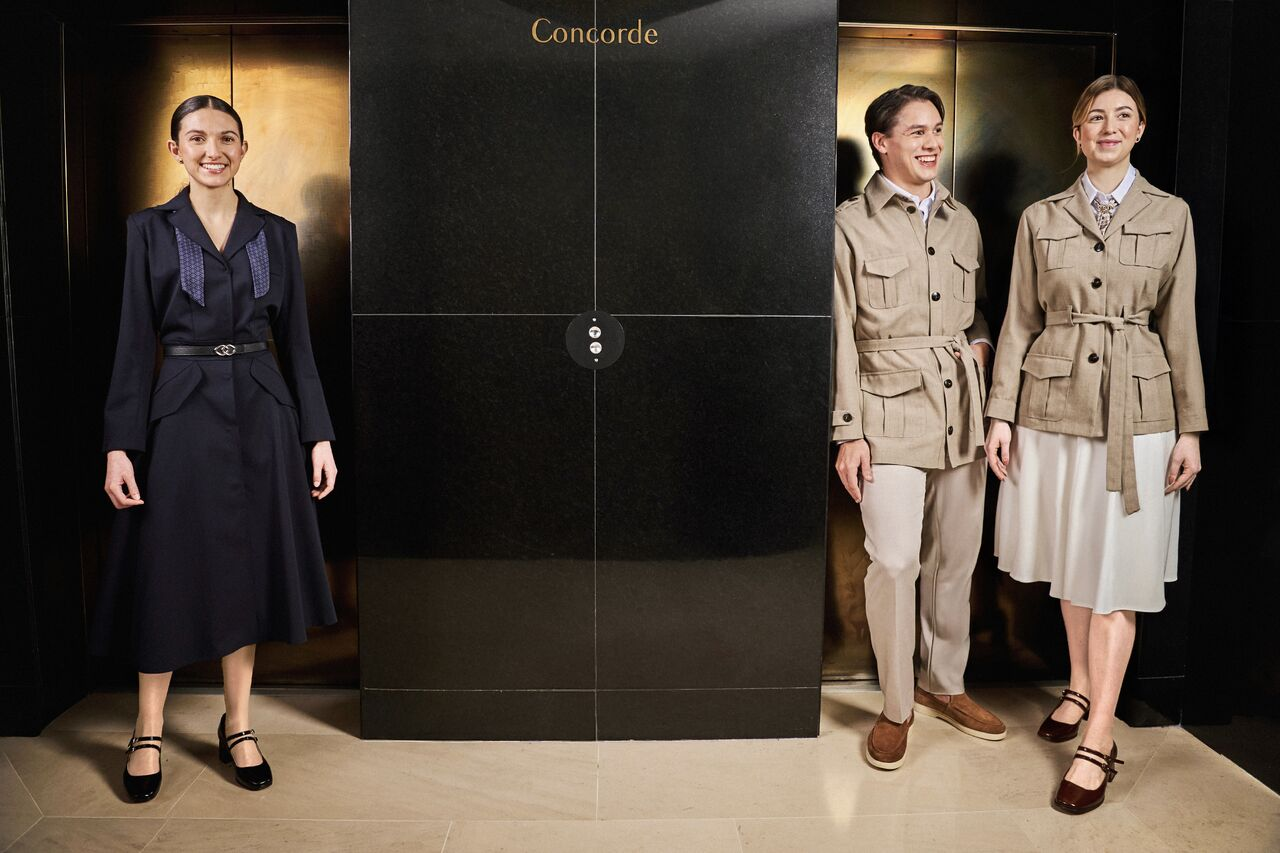

Sofitel has launched Le Vestiaire, a global staff wardrobe created in collaboration with French designer Cordelia de Castellane, marking one of the most ambitious uniform initiatives in luxury hospitality in recent years. The 45-piece collection will be rolled out across all Sofitel hotels from the end of 2026, dressing the brand’s 25,000 employees across more than 120 properties worldwide. The move goes well beyond a wardrobe refresh. It is a deliberate signal about how Sofitel views its people – and how it wants guests to perceive them.
From uniform to vestiaire
The distinction in language is intentional. De Castellane, artistic director of Dior Maison and Baby Dior, has described her brief in terms that reject the conventional hospitality uniform entirely. “For this project, I didn’t want to create uniforms, I wanted to design a vestiaire. The idea is simple: pick and choose a look that fits the right place and the right position. Most importantly, I knew I didn’t want to lock people into a specific uniform.”
Sofitel employees are empowered to curate their own vestiaire, freely mixing and matching a range of versatile pieces to create silhouettes suiting different body shapes, personal preferences, and levels of comfort. That shift from prescription to personal expression has meaningful implications for how hospitality brands think about frontline workforce dignity and engagement.
The design language
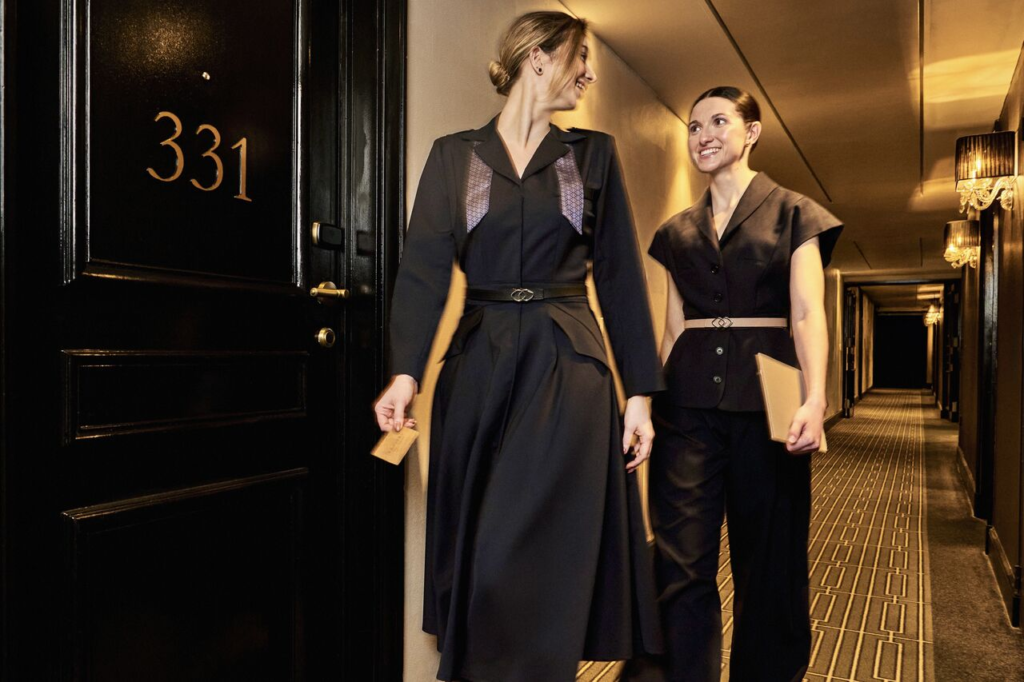
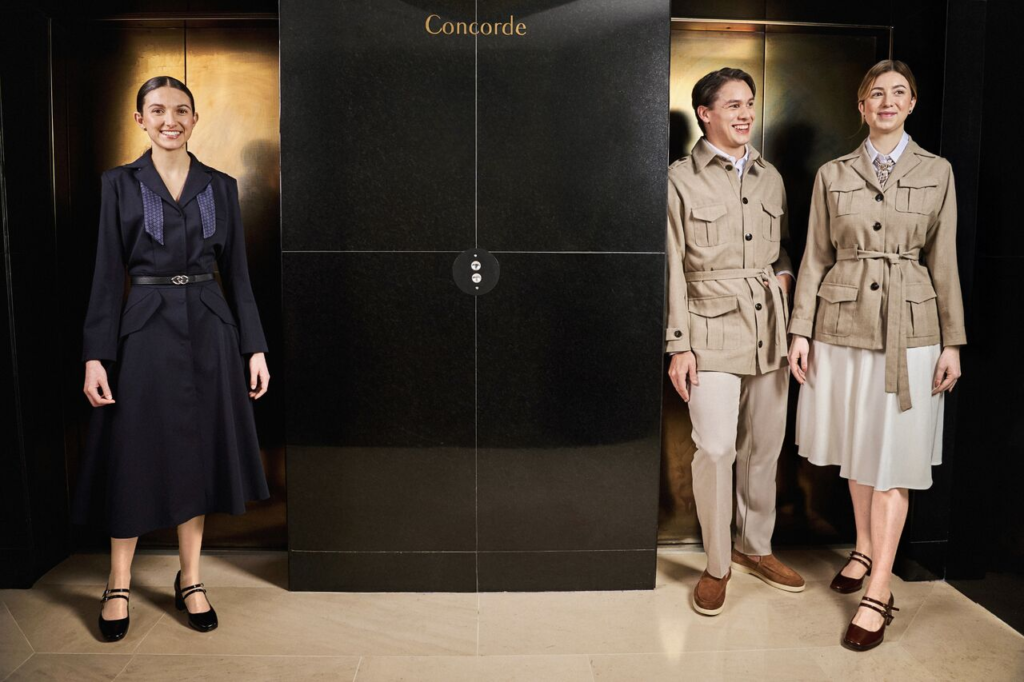
A harmonious palette of navy blue, coconut milk, beige, and denim blue anchors the collection, chosen for its timeless appeal and its ability to complement every complexion and environment.
Sofitel’s iconic logo, two interlinked diamonds, has been reimagined as a monogram print featured throughout the collection. Accessories including belts and scarf brooches carry the brand’s Cultural Link motif, its symbol of cross-cultural connection. The collection has been internationally tested across pilot hotels and developed with sustainability credentials aligned to Sofitel’s CSR commitments: Paris Good Fashion was involved in the development, with the wardrobe designed to champion repairability and recyclability.
An employer brand argument
For HR professionals in luxury hospitality, the strategic intent here is worth examining. The investment signals a recognition that frontline staff are not incidental to the guest experience; they are the brand in its most visible, human form.
Sofitel CEO Maud Bailly made this case directly. “It was essential to me that our teams, the very essence of luxury, could also benefit from this new era of beauty. It felt only natural that they should shine more than ever.”
That framing matters. At a time when luxury hospitality faces persistent recruitment and retention pressures, the decision to commission a couture designer to create a staff wardrobe is as much a talent strategy as it is a brand exercise. It communicates to prospective and existing employees that their day-to-day experience, including how they feel in what they wear, is a leadership priority.
The broader strategic context
Le Vestiaire arrives at a significant moment for Sofitel. The partnership marks a key milestone in the brand’s ongoing renaissance, with 32 new hotel openings planned over the next three years. Properties such as Sofitel New York and Sofitel Montreal Golden Mile are undergoing renovations, and the brand is positioning itself for renewed global relevance.
The collection is designed to enable each Sofitel hotel, resort, and residence, from Sofitel Dubai The Obelisk to Sofitel Legend Metropole Hanoi and Sofitel Bali Nusa Dua, to curate a wardrobe fitting the local culture while maintaining Sofitel’s signature French elegance. That adaptability across climates, cultures and property types is a practical challenge the collection was specifically designed to address.
What this means for the sector
Sofitel is not the first luxury hotel group to invest in fashion-forward staff presentation, but the scale and strategic framing of Le Vestiaire sets a benchmark. Partnering with a designer of de Castellane’s stature, whose career spans the most prestigious French couture houses, elevates the initiative beyond PR.
For hospitality HR leaders, the question Le Vestiaire raises is not simply aesthetic. It is about the relationship between how staff are dressed and how they feel: their confidence, their pride of association, and ultimately their engagement with guests. Sofitel is betting that those things are connected, and that investing in them at scale is worth it.
De Castellane put it plainly: “Fashion is never neutral. It influences our mood every day. I wanted these pieces to feel positive and reassuring, clothes that support people emotionally as much as visually, and that reflect the warmth and elegance of Sofitel’s hospitality.”


