

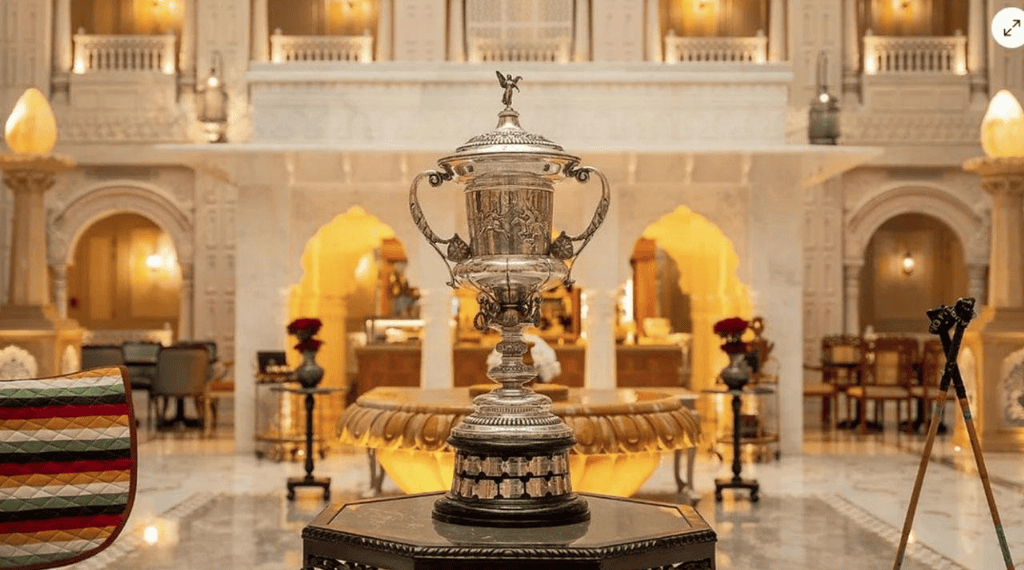

Raffles Hotels & Resorts will continue as title sponsor of the Sirmour Cup polo tournament for 2026, with its Jaipur and Udaipur properties jointly backing the event for a second consecutive year. The tournament runs from 9 to 15 February at the Rajasthan Polo Club, one of the marquee fixtures of the Jaipur winter polo season.
The sponsorship reflects Raffles’ strategy of embedding itself within Rajasthan’s cultural fabric rather than competing solely on property amenities. In a luxury hotel market projected to grow from $2.7 billion to $6.2 billion by 2033, heritage-led positioning has become a key differentiator – particularly in Rajasthan, where palace hotels and experiential tourism command premium rates.
The Sirmour Cup is a 14-goal tournament that draws players, patrons and enthusiasts from across India and internationally. Named after the princely state of Sirmur, the cup forms part of a winter calendar that includes the Rajmata Gayatri Devi Memorial Cup and the Jaipur Open.
Rajasthan Polo Club, founded in 1957 from the earlier Jaipur Polo Club established in 1918, operates under the patronage of Jaipur’s former royal family. The grounds have hosted global dignitaries over decades, including HRH Prince Philip, HRH Prince Charles, the late Diana, Princess of Wales, and former US First Lady Jacqueline Kennedy.
The club’s current patron, HH Maharaja Sawai Padmanabh Singh of Jaipur, has revitalised competitive polo in the city since taking on leadership following his grandfather’s death in 2011. In 2017, he led the Indian national team at Hurlingham Park – the first visit by an Indian team to the venue in over 70 years.
For Raffles, the polo sponsorship connects its two Rajasthan properties to a tradition that predates modern luxury hospitality in the region. Maharaja Sawai Man Singh II, who ruled Jaipur from 1922 to 1949, was a nine-goal handicap player who led the legendary Jaipur team to an unbeaten record in English tournaments from 1930 to 1938.
“The Jaipur Polo Season is one of the city’s defining winter traditions, and the Raffles Sirmour Cup holds a special place in that calendar,” said Rajat Sethi, Cluster General Manager of Raffles and Fairmont Jaipur. “For Raffles Jaipur, this association is an opportunity to deepen our role as a cultural partner by connecting guests with Jaipur’s heritage and celebrating the elegance and excellence of the sport.”
Raffles Udaipur, which opened in 2021 as the brand’s first property in India, sits on a 21-acre private island in Udai Sagar Lake. The property expanded in March 2025 with the addition of Raffles Lakeshore Udaipur, bringing total inventory to 137 keys. Raffles Jaipur, which opened in July 2024, offers 50 suites in a white marble structure inspired by Mughal zenana architecture.
“At Raffles Udaipur, our philosophy is rooted in thoughtful hospitality that honours India’s rich cultural heritage,” said Gurnoor Bindra, General Manager of Raffles Udaipur. “Supporting the Raffles Sirmour Cup strengthens our commitment to preserving tradition and celebrating a sport that is deeply interwoven with Rajasthan’s identity.”
The co-sponsorship model – rather than single-property backing – allows Accor to position its Rajasthan Raffles portfolio collectively. Parent company Accor operates more than 70 hotels across India and is developing a third Raffles property at Ranthambore, scheduled to open in mid-2027. A Sofitel Legend property in Jaipur is planned for late 2028.
The timing aligns with broader market conditions favouring luxury hospitality in Rajasthan. Industry analysis identifies Udaipur and the wider Rajasthan circuit as commanding ultra-premium rates, with heritage properties and experiential luxury offerings particularly strong performers. The state’s peak tourist season runs from October to March, making February polo fixtures a natural opportunity to capture high-value guests.
Polo sponsorships have long served as positioning tools for luxury hospitality brands globally. In Rajasthan, where the sport carries direct connections to the region’s royal lineage, such associations carry additional weight. The Sirmour Cup specifically references Princess Padmini Devi of Sirmur, who married Maharaja Bhawani Singh of Jaipur in 1966 – linking the tournament to the same families whose palaces and grounds now attract international travellers.
For luxury operators seeking differentiation in an increasingly competitive Indian market, cultural partnerships offer a path that property investment alone cannot replicate. Whether Raffles’ polo positioning translates into measurable brand preference among high-net-worth travellers remains difficult to quantify – but in a market where heritage themes command the highest share, the strategic logic is clear.
The 2026 Raffles Sirmour Cup marks another year of a relationship that positions both properties not merely as places to stay, but as participants in the traditions that define Rajasthan’s appeal to the global luxury traveller.


