

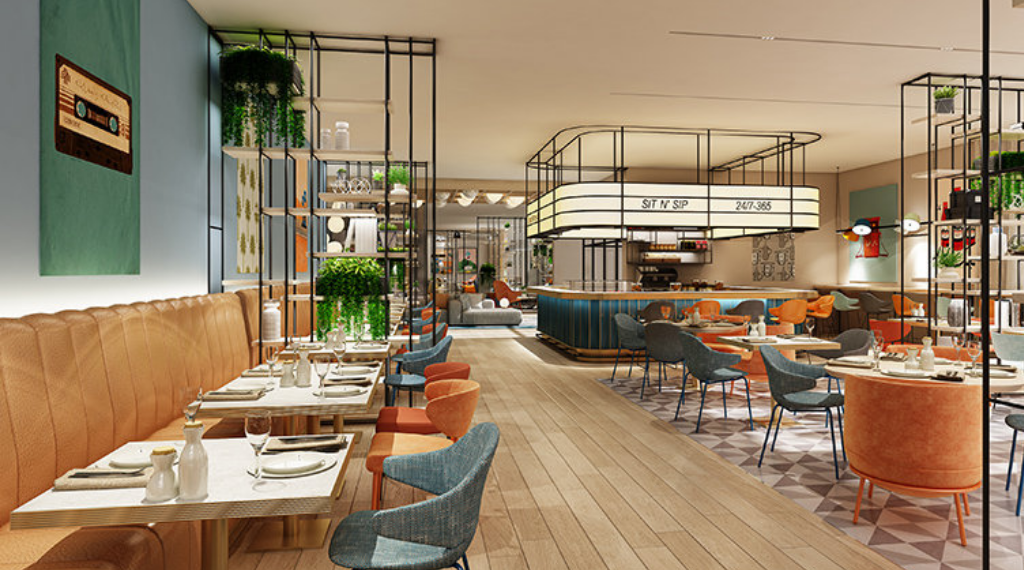

IHG Hotels & Resorts has signed a management agreement with Chentoor Hotels Pvt Ltd for the development of Holiday Inn Express & Suites Madurai, scheduled to open in early 2029. The 150-key property – including 30 suites – will be situated near Madurai International Airport, targeting a visitor mix that spans religious pilgrimage, transit demand and an emerging corporate segment that has grown significantly since Tamil Nadu announced Madurai as one of four new Global Capability Centre hubs in August 2025.
The signing adds to IHG’s accelerating India pipeline. The company currently operates 51 hotels across six brands in the country and holds a pipeline of 89 further properties, following its announcement in January 2026 that it intends to more than triple its India estate to over 400 open and in-development hotels within five years. India delivered a third consecutive year of record signings for IHG in 2025, and the Madurai agreement reflects the company’s stated strategy of moving into high-potential secondary markets where branded accommodation supply remains materially underserved relative to demand.
Madurai presents a distinctive demand profile. The city welcomed over 27 million visitors in 2024, according to figures cited in the IHG announcement, anchored by its status as a major Hindu pilgrimage destination and home to the Meenakshi Amman Temple, one of India’s most visited religious sites. The airport also functions as the primary gateway for travellers en route to Rameswaram and Kanyakumari, extending its catchment well beyond Madurai itself. Horwath HTL, in its 2024 India Hotel Market Review, specifically identified Madurai as a destination where the religious and leisure travel prompt overlaps in ways that support year-round demand – a characteristic that reduces the seasonal risk profile for incoming hotel investment.
The commercial rationale has sharpened further with the GCC announcement. Tamil Nadu’s decision to establish Global Capability Centre hubs in Madurai, Coimbatore, Tiruchirappalli and Vellore – deepening the state’s IT/ITES footprint beyond Chennai – introduces a business travel segment that currently lacks adequate internationally branded accommodation. For a property positioned near the international airport with 30 suites suited to extended stays, this timing is strategically significant.
“Madurai is not only one of India’s most culturally iconic cities but also a rapidly expanding economic centre with strong year-round business, transit and leisure demand,” said Sudeep Jain, Managing Director, South West Asia at IHG Hotels & Resorts. “This signing aligns with our strategy to expand in high-growth micro-markets across India, and we are pleased to partner with Chentoor Hotels Pvt Ltd to bring this project to life.”
A spokesperson for Chentoor Hotels framed the agreement in terms of market confidence and owner return. “The city is experiencing strong infrastructural and economic momentum, and this project reflects our commitment to developing high-quality hospitality assets in high-potential markets,” the spokesperson said, noting that IHG’s global brand systems and operating track record underpinned the decision to pursue a management structure rather than going independent.
The Holiday Inn Express brand brings specific advantages in markets of Madurai’s profile. With over 3,200 hotels globally and a Generation 5 design focused on efficient, flexible spaces, it is IHG’s largest and fastest-growing brand and accounts for more than 70 per cent of the company’s operating hotels in India. Generation 5’s smart spatial design and standardised service model is calibrated for mid-scale business and transit travellers – exactly the guest profile that Madurai’s airport-adjacent location and GCC-driven corporate demand represent.
The broader India market data provides useful context. India’s branded hotels recorded 68 per cent occupancy in the 2024-25 financial year, according to Hotelivate, with South India specifically leading ADR growth at 7.9 per cent. Tier-2 markets – within which Madurai sits – posted an ADR of $84 and RevPAR of $57, compared to $119 and $89 respectively for Tier-1 cities. The gap signals both the pricing headroom available as branded supply penetrates secondary markets, and the opportunity for well-positioned branded properties to set new rate benchmarks in their catchments.
For HR and talent professionals in the hospitality sector, IHG’s secondary-city expansion strategy carries specific workforce implications. Delivering consistent service quality in markets where internationally trained hospitality talent is scarcer than in metros requires early investment in recruitment pipelines, often in partnership with local hotel management institutes, and structured pre-opening training programmes that bridge the gap between IHG’s global brand standards and local labour market conditions. With 89 hotels in the India pipeline, many in emerging markets similar to Madurai, IHG’s ability to build and sustain local talent infrastructure will be as consequential as its development pace.
The Madurai signing arrives as the secondary-city hotel market across India begins to attract sustained institutional interest. Several major international brands – Marriott, Hilton and Accor among them – have been signing deals in Tier-2 and Tier-3 markets in parallel, drawn by lower land costs, less competitive displacement risk and the structural opportunity created by domestic demand growth that consistently outpaces supply additions outside the major metros.

