IHG Q3 results show 5.3% growth in global revenue per available room for the third quarter of 2026, alongside 92 hotel openings and a further 164 signings by IHG Hotels & Resorts.
The RevPAR and average daily rate changes in this report are comparable measures at constant exchange rates against the same period in 2025. The trading update, published on 22 October, shows stronger demand in the Americas and across Europe, the Middle East, Asia and Africa, offset by a decline in Greater China. Group travel led rooms-revenue growth across the stay categories disclosed.
IHG Q3 results show rate and occupancy gains
Average daily rate increased by 3.9%, while occupancy improved by 0.9 percentage points. Comparable rooms revenue rose by 10% for groups, 5% for leisure and 4% for business travel.
IHG’s open estate reached 7,186 hotels, with net system growth of 4.9% year on year. It remained confident of meeting full-year consensus expectations.
These measures describe different parts of the business. RevPAR tracks the trading performance of available rooms; net system growth measures the expansion of the estate after removals. A stronger result in one does not automatically establish the profitability of an individual hotel.
Regional performance remains uneven
The detailed announcement records US RevPAR growth of 6.9%. Across the Americas, occupancy reached 73.9%, with group business again leading the increase in comparable rooms revenue.
In EMEAA, UK RevPAR rose by 2.8%, Continental Europe by 3.8%, and East Asia and Pacific by 8.4%. The Middle East was broadly flat after its second-quarter decline, although the six Gulf Cooperation Council countries recorded a 12% fall.
Greater China RevPAR fell by 3.3%. IHG attributed the weaker performance to weather disruption and changes in public holiday timing that encouraged outbound travel. The region nevertheless opened 30 hotels during the quarter, illustrating the difference between current trading and longer-term development activity.
For operators comparing their own results, the regional split is more useful than treating the global headline as a universal demand forecast. Pricing decisions still need to reflect a hotel’s local booking patterns, customer mix and competitive position.
What the brand and pipeline data show
IHG’s supplementary figures put global comparable occupancy at 72%. Within the comparable estate, Kimpton recorded 14.4% RevPAR growth, while Holiday Inn Express grew by 4.7% and Holiday Inn by 3.6%. These are brand-level comparisons, not forecasts for newly opened properties.
The IHG Q3 results also show a pipeline containing 2,426 hotels and 352,801 rooms at the end of September. Holiday Inn Express accounted for 682 planned hotels, while voco had 126 and Garner 114.
IHG defines that pipeline as contracted hotels in planning or construction, with the relevant fees paid. It does not mean every property is under construction or will open within the same reporting period.
WINC Wire recently covered IHG passing 1,000 open hotels in Europe. The quarterly numbers provide a broader view of the estate and its trading performance beyond that regional milestone.
Why the operating model matters
IHG principally works through franchise and management arrangements with third-party hotel owners. Its description of the business identifies room growth, RevPAR and royalty fees as drivers of franchise fee growth. Under management agreements, the hotel building remains in third-party ownership and fees typically include base and incentive components.
For owners and hotel leaders, that distinction matters when reading a group trading update: stronger brand-wide performance and a larger distribution network are not substitutes for property-level budgets, cost controls or service delivery.
WINC Wire view: match growth with readiness
The practical question for hospitality teams is how development commitments become operating hotels. Recruitment, leadership capacity, systems training and a realistic opening sequence need to be planned together, rather than inferred from a signed-room total.
Our guides to pre-opening workforce planning and building or hiring skills for hotel expansion set out frameworks for that work. They are operational considerations arising from the growth story, not staffing commitments announced by IHG.
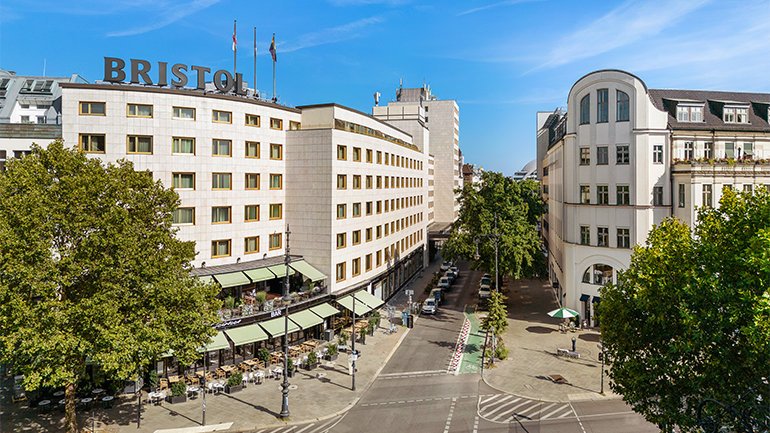
Image: Bristol Berlin, Vignette Collection. Photo: IHG Hotels & Resorts.