

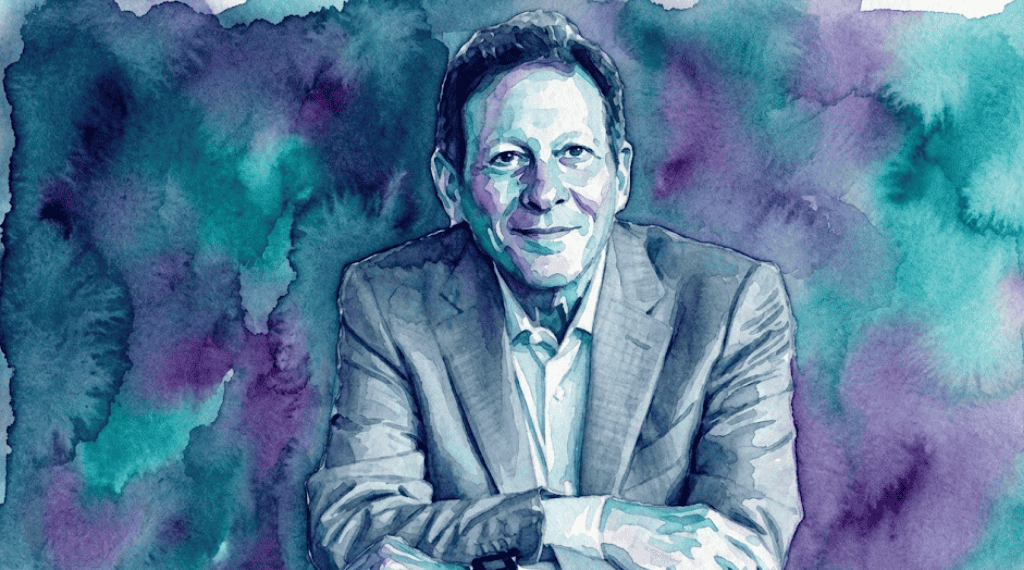

Thomas J. Pritzker has retired as executive chairman of Hyatt Hotels Corporation, effective immediately, bringing to a close a 45-year involvement with the company his family founded. The Chicago-headquartered group announced the transition on 16 February.
Pritzker, 75, will not seek re-election to the board of directors at Hyatt’s annual meeting of stockholders in May. The board has appointed Mark S. Hoplamazian, Hyatt’s president and chief executive officer, to succeed Pritzker as chairman of the board, also effective immediately.
Pritzker has served as a board member and executive chairman since August 2004 and held senior executive and chairman responsibilities for predecessor entities from 1980. During his tenure, Hyatt expanded its global brand presence, strengthened its asset-light business model and delivered long-term value for stockholders, according to the company.
A planned succession
Richard Tuttle, chair of the board’s nominating and corporate governance committee, said the transition reflected deliberate governance planning. He described the board’s succession process as thoughtful and expressed confidence in Hoplamazian’s ability to continue driving Hyatt’s long-term success, citing his deep knowledge of the business, strong relationships with owners and colleagues, and a proven track record spanning nearly two decades as CEO.
Pritzker described his time at Hyatt as one of the great experiences of his life and said the company was well positioned for the future. He expressed confidence in Hoplamazian, the leadership team and the board to continue building on the company’s foundation.
Hoplamazian said he was honoured by the board’s confidence and that Pritzker’s decision reflected his stewardship and strong commitment to Hyatt over many decades. He reaffirmed the company’s focus on long-term growth, advancing care for colleagues, delivering meaningful guest experiences and driving performance for owners and stockholders.
Hoplamazian’s track record
The new chairman brings substantial institutional knowledge to the expanded role. He joined Hyatt’s board in November 2006 and was named president and CEO the following month. Before that, he spent 17 years as president of The Pritzker Organization, the principal financial and investment advisor to the Pritzker family’s business interests, during which he advised Hyatt and its predecessor companies.
Under his leadership, Hyatt has undergone a significant strategic transformation. The company went public in 2009, navigated the pandemic and executed a series of acquisitions that reshaped its portfolio. Notable transactions include the $2.6 billion purchase of Playa Hotels & Resorts in early 2025 and the subsequent $2 billion sale of Playa’s real estate portfolio, retaining long-term management agreements.
Hoplamazian was named the 2025 Cornell Hospitality Icon of the Industry and serves on the executive committees of both the American Hotel & Lodging Association and the World Travel & Tourism Council. He is also chairman of Skills for Chicagoland’s Future and vice chairman of the board of trustees at the Aspen Institute.
A company in strong strategic position
The leadership transition comes at a point of considerable operational momentum. Hyatt reported full-year 2025 adjusted EBITDA of $1.16 billion and gross fees of nearly $1.2 billion. System-wide RevPAR grew 2.9 per cent, with net rooms growth of 7.3 per cent.
The company’s asset-light earnings mix reached 85 per cent in 2025, up 38 percentage points from prior levels, with management projecting 90 per cent for 2026. Since 2017, Hyatt has executed $5.7 billion in asset dispositions while making $4.4 billion in asset-light acquisitions, fundamentally reshaping its earnings profile from property ownership towards fee-based revenue.
Hyatt’s development pipeline stands at a record of approximately 148,000 rooms. Three new brands launched in 2025 – Unscripted by Hyatt, Hyatt Studios and Hyatt Select – accounted for nearly two-thirds of US signings last year, with half of those signings in markets where Hyatt does not currently have a brand presence.
The World of Hyatt loyalty programme reached approximately 63 million members, representing 19 per cent year-on-year growth. Hyatt claims 43 per cent more members per hotel than its closest competitor.
Implications for the workforce
For HR leaders and hospitality executives, the transition offers a case study in leadership succession at a major global operator. The consolidation of the chairman and CEO roles into a single position represents a governance shift that will likely attract attention from institutional investors and proxy advisors ahead of the May meeting.
Hyatt’s dual-class share structure remains unchanged by the transition, according to SEC filings, though certain voting provisions tied to Pritzker’s role as executive chairman will now terminate.
Looking ahead, Hyatt projects system-wide RevPAR growth of one to three per cent and net rooms growth of six to seven per cent for 2026. Hoplamazian told investors the company’s competitive advantage would continue to expand, fuelled by the attractiveness of its brand network and opportunities to grow across geographies and chain scales.
The departure marks the end of direct founding-family governance at one of the world’s largest hospitality companies – and the beginning of a new chapter under a leader whose tenure and strategic record suggest continuity rather than disruption.


