

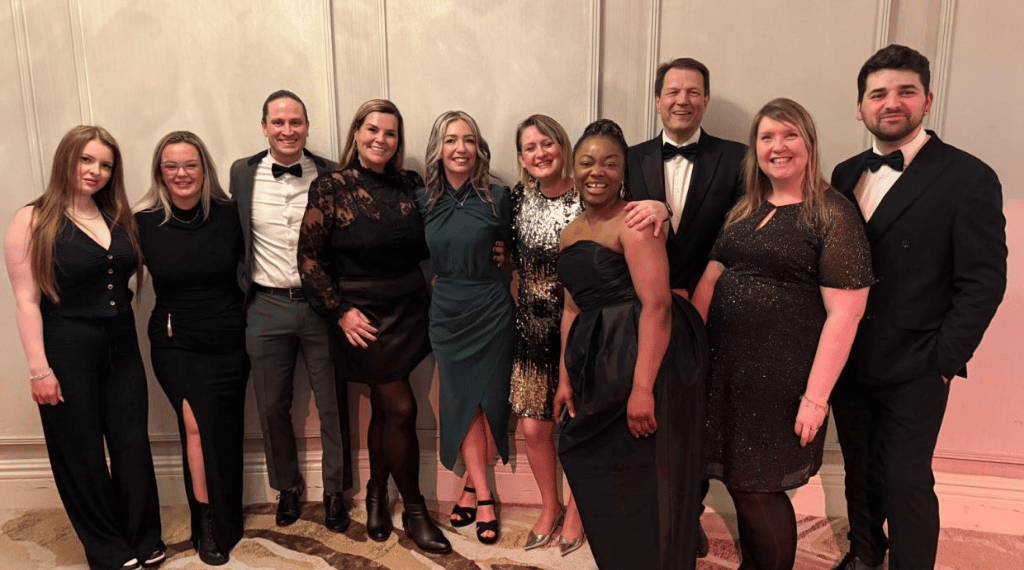

GAIL’s Bakery has taken Silver in the People Development Programme of the Year (Private Sector) category at the 30th Annual Learning Awards, held at JW Marriott Grosvenor House London on 12 February 2026. The award recognises Top Crust, the bakery group’s structured internal leadership development programme designed to accelerate progression into Bakery Manager and Assistant Bakery Manager roles.
The accolade places GAIL’s alongside Gold winner Dishoom – a London-based restaurant group that has built a strong reputation for people development – and ahead of Bronze winner Aggreko in a category that drew entries from organisations including Deloitte UK, Dell Technologies and Bright Horizons. The Learning Awards, hosted by the Learning and Performance Institute (LPI), received a record-breaking number of nominations from 56 countries this year, with 66 industry leaders serving as judges.
A programme built around a business problem
Top Crust was developed in direct response to a challenge familiar to hospitality operators across the UK: a tight external talent market and a growing need for management-ready leaders as the business expanded. Post-pandemic and post-Brexit conditions had made external recruitment increasingly competitive, while GAIL’s bakery footprint was scaling rapidly – from around 85 sites when the programme was first conceived to more than 170 today.
Senior L&D Manager Laura Akers, who joined the business to design the programme, has described the founding logic clearly. With a clear plan for further expansion and no structured pathway tying existing training together, GAIL’s needed a way to identify and prepare its own people for the roles that growth would demand.
The result is a multi-level programme now spanning five pathways – supporting aspiring Team Leaders, Assistant Bakery Managers, Bakery Managers and Group Managers, as well as Support Office teams. At its launch, the appetite was immediate: 98 applications were received for 48 available places, a signal that internal demand for structured development had been significantly underserved.
Cross-functional by design
What distinguishes Top Crust from a standalone L&D initiative is its deliberate architecture across functions. The programme was built with active input from the Operations Team and Bakery Managers through focus groups and feedback sessions, and the Talent and Operations functions co-lead the Talent Days that serve as a programme milestone. Regardless of the outcome of those days, every participant receives a Personal Development Plan – a commitment that positions learning as continuous rather than contingent on immediate progression.
The programme has recorded a Net Promoter Score of +82, a figure that reflects strong participant endorsement rather than passive uptake. It has also been recognised internally, receiving the Architect award at GAIL’s Quarterly Awards, nominated by the Operations Team – underscoring the cross-functional ownership that the company’s LinkedIn announcement rightly highlighted.
Why this matters beyond GAIL’s
The hospitality and food services sector has long struggled with the question of internal mobility. High turnover rates, seasonal demand patterns and the operational intensity of frontline roles create conditions in which structured career development is frequently deprioritised in favour of immediate staffing needs. Top Crust makes a different argument: that the cost of building a pipeline is lower than the cost of competing for external talent in a market where competition for skilled operators is structural rather than cyclical.
GAIL’s has articulated an ambition to fill 70% of its management roles internally – a target that, if sustained, would materially reduce recruitment spend, compress time-to-competency for new managers and strengthen the retention proposition for frontline team members who see a credible path upward. The Learning Awards Silver is external validation that the programme design is credible, not merely aspirational.
For HR and L&D leaders in hospitality and food retail, the GAIL’s model offers a replicable template: co-design with operations from the outset, build progression pathways that span multiple role levels, ensure talent identification is a shared responsibility rather than an L&D function alone, and close the loop with a PDP regardless of outcome. The results suggest that when those conditions are met, internal talent development can compete with – and outperform – external hiring as a growth strategy.


