

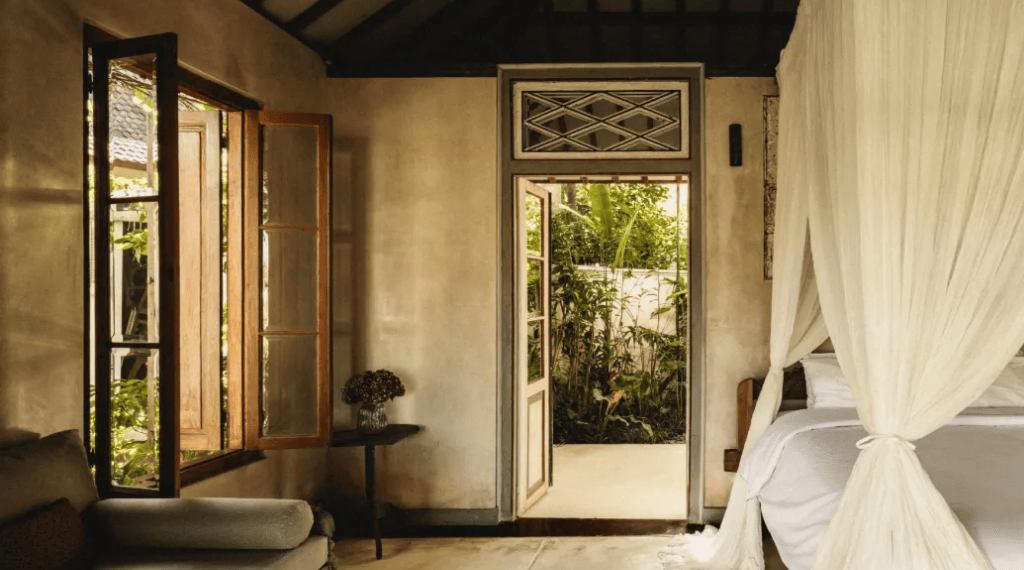

The Marriott-owned collection of independent hotels has posted record regional growth, with Asia Pacific accounting for 28 per cent of its global portfolio expansion in 2025 – a first in its 30-year history.
Design Hotels announced the addition of more than 14 properties across six Asia Pacific markets in December, spanning Japan, Thailand, Malaysia, Indonesia, China and a return to India. The signings mark the strongest regional performance in the Berlin-based brand’s three decades of operation.
The expansion is significant not only for its scale but for its strategic intent. Design Hotels, which curates a portfolio of more than 300 independently owned properties across 50 countries, is positioning itself squarely at the centre of the Asia Pacific luxury market – a sector that multiple research firms project will grow at between seven and nine per cent annually through the end of the decade.
“This growth underscores Asia Pacific’s importance to the Design Hotels’ global strategy and reflects the remarkable vision of independent hoteliers across the region,” said Stijn Oyen, Managing Director at Design Hotels. “By welcoming these diverse properties into our portfolio, we are deepening our ability to connect travellers with transformative experiences rooted in creativity and community.”
A portfolio shaped by place
The new signings reflect the brand’s distinctive approach to hospitality – each property is selected for its architectural identity, cultural grounding and the creative ambition of its owner.
Among the standout additions is Hotel Irada in Pune, which marks Design Hotels’ first member property in India. Set within a 26.7-hectare working winery, the property combines agricultural heritage with luxury hospitality, offering a model that diverges from the metropolitan hotel developments that have dominated India’s premium accommodation market.
In Japan, Yoruya in Kurashiki is a 13-room property whose design draws on traditional Edo-period townhouse architecture. ELSE Kuala Lumpur occupies a restored 1930s heritage building in the city’s downtown cultural quarter, while Magia de Uma in Bali, from the team behind Italy’s Palazzo Daniele, offers a retreat above the rice paddies of Canggu.
In China, The ArcadiaPlace at Lugu Lake in Sichuan was designed by studio IMAGO to celebrate the ancient culture of the region’s matriarchal Mosuo people. Thailand’s Public House in Bangkok’s Sukhumvit district takes a contemporary approach to the British gentleman’s club format.
Sustained global momentum
The Asia Pacific push forms part of a broader growth trajectory. Design Hotels reported 15 per cent expansion of its global portfolio over the preceding 12 months, building on the 29 signings and 10 per cent growth recorded in 2024 – itself described by the company as a record year with double-digit revenue growth.
Across the Americas, 11 hotels joined the collection in 2025, adding 828 keys across destinations including Miami, Atlanta, Asheville and Valle de Guadalupe in Mexico. European and African additions included Esperanza Lake Resort in Lithuania, Stieg’nhaus in Austria and Voaara in Madagascar.
Oyen, who became Managing Director in early 2024 after roles at Relais & Châteaux and W Hotels, has set an ambitious target of surpassing 400 properties in the coming years. The brand’s model – an affiliation structure where independently owned hotels pay a basic fee and additional commissions based on business delivered – is proving attractive. According to the company, roughly 60 per cent of its 300-plus participating owners are first-time hotel operators.
The Marriott advantage
Design Hotels’ growth cannot be separated from its relationship with parent company Marriott International. Founded in 1993 by Claus Sendlinger, the brand was acquired by Starwood Hotels & Resorts in 2011 and became fully owned by Marriott in 2021. Its integration into the Marriott Bonvoy loyalty programme – which connects member hotels to more than 210 million travellers worldwide – has been a significant driver of commercial performance.
More than half of Design Hotels’ member properties now participate in the Bonvoy programme, according to Oyen. The brand’s position within Marriott’s portfolio of more than 9,700 properties across 30 brands and 143 countries provides distribution reach that few independent hotel networks can match.
Yet the brand maintains clear differentiation within the Marriott stable. Unlike most Marriott brands, Design Hotels does not impose operational standards on its members, instead celebrating each property’s individual character. This flexibility has made it an attractive option for independent hoteliers who want access to global distribution without surrendering creative control.
What this means for the sector
The expansion reflects a wider industry shift. Major hotel groups are increasingly competing for independent luxury properties through collection and soft brand models. Hilton partnered with Small Luxury Hotels of the World in 2024, adding some 400 boutique properties. IHG’s Vignette Collection and Accor’s Emblems Collection pursue similar strategies in the Asia Pacific market.
For independent hoteliers in the region, the proliferation of these platforms presents both opportunity and strategic choice. Design Hotels’ value proposition – pairing creative independence with Marriott’s commercial infrastructure – positions it as a compelling option in a market where rising affluence, government tourism investment and growing demand for culturally authentic travel experiences are driving sustained growth.
The brand has also recently relocated to new headquarters in Berlin, designed by studio RHO. The move signals institutional confidence in its trajectory and a commitment to the creative culture that has defined Design Hotels since its founding.
Whether the Asia Pacific signings translate into sustained commercial performance will depend on execution, market conditions and the ability of these diverse, independently operated properties to deliver on the promise of design-led hospitality at scale. What is clear is that Design Hotels, quietly and methodically, has staked its most significant claim yet in the world’s fastest-growing luxury hotel market.


