

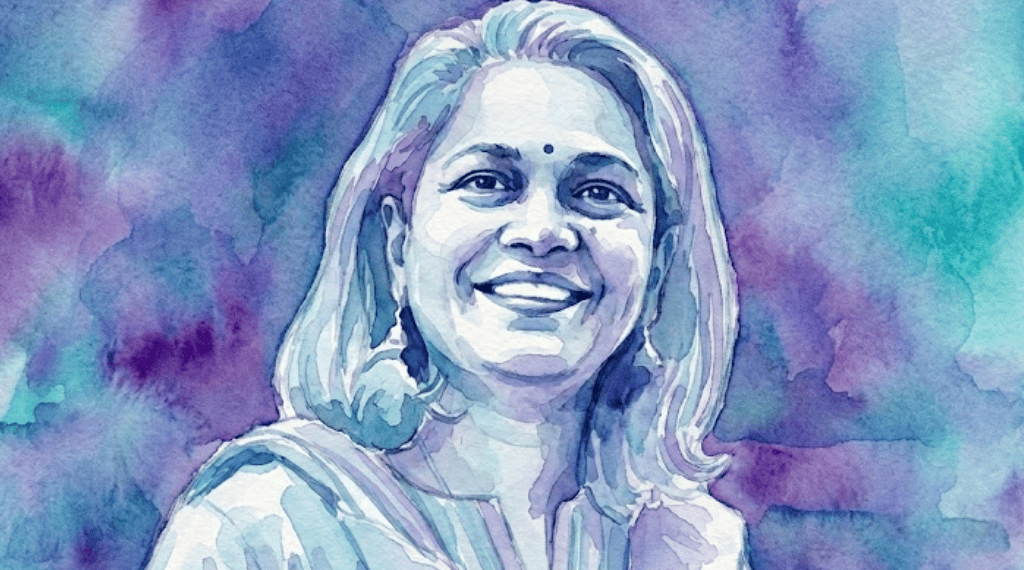

When Sunita Rebecca Cherian joined Wipro as a fresh engineering graduate in 1996, India’s IT industry was still finding its feet. Three decades later, she exits as one of the most influential HR leaders in Indian technology, having shaped the workplace culture of an organisation that now spans 65 countries and employs over 230,000 people.
Her retirement marks the conclusion of a rare campus-to-C-suite journey – one that bucked the modern trend of job-hopping in favour of building an entire career within a single organisation she describes as her “second home.”
From sales floors to the executive committee
Cherian’s path to the Chief Culture Officer role was anything but linear. An electrical and electronics engineer from the College of Engineering, Trivandrum, with a postgraduate diploma in business administration, she began in sales rather than HR. That customer-facing foundation would later inform her approach to talent management, grounding her people strategies in business realities rather than abstract policy.
Over 29 years, her portfolio expanded to encompass human capital strategy, board strategy, total rewards, workforce transitions, mergers and acquisitions, organisational design, HR shared services, sustainability, and inclusion. She led change strategies for leadership development and talent management across multiple divisions, including a start-up unit within Wipro’s broader structure.
The breadth of experience positioned her uniquely when Wipro created the Chief Culture Officer role – a position that acknowledged culture as a strategic asset requiring dedicated executive attention.
Building the Women of Wipro framework
Cherian’s most enduring legacy may be the “Women of Wipro” programme, launched in 2008 under her guidance. Rather than applying a one-size-fits-all approach to gender inclusion, she championed a life-stage framework that recognised women’s needs shift across their careers.
The early career stage focused on building perspectives and fuelling aspirations. Mid-career programming emphasised flexibility initiatives to support employees navigating family responsibilities. Senior-level interventions addressed the glass ceiling through sponsorship and leadership development.
The programme spawned initiatives including Enrich, a sponsorship programme for high-potential women leaders, and Begin Again, designed to re-integrate women returning from career breaks. Refresh supported working mothers returning from maternity leave through reskilling programmes.
The results attracted external recognition. Wipro has appeared on the Bloomberg Gender-Equality Index for multiple consecutive years. The company has been named among the 100 Best Companies for Women in India for six consecutive years and entered the Hall of Fame in the Avtar and Seramount rankings. The Human Rights Campaign’s Corporate Equality Index has recognised Wipro as a Best Place to Work for LGBTQ+ Equality since 2020.
Beyond Wipro’s walls
Cherian’s influence extended to shaping industry-wide approaches to inclusion. As Chair of the NASSCOM National Diversity and Inclusion Council, she helped set standards across India’s technology sector. Her membership of the World Economic Forum’s Global Future Council positioned her among global voices shaping workplace policy discussions.
She served on the Confederation of Indian Industry and Catalyst D&I Core Committee, and held positions on the HR Advisory Board of TA Pai Management Institute (TAPMI) and the Board of Bangalore International Centre.
In 2014, Wipro received the Women’s Empowerment Principles Leadership Award, a joint initiative of UN Women and the UN Global Compact, recognising CEO commitment and innovation in advancing gender equality.
The Five Habits transformation
More recently, Cherian spearheaded Wipro’s cultural transformation initiative centred on “Five Habits for a Growth Mindset.” When Executive Chairman Rishad Premji sought to build what he described as “a high-performing organisation that still has a soul,” Cherian became the architect of execution.
The habits – being respectful, being responsive, always communicating, demonstrating stewardship, and building trust – were deliberately simple. As Premji explained in a McKinsey interview, they needed to translate identically whether understood by a 14-year-old or employees in Hyderabad, Manila, Cincinnati, or London.
The framework acknowledged that employees experience behaviours, not values statements. By anchoring culture change in observable habits rather than abstract principles, Wipro sought to make transformation tangible and measurable.
Navigating disruption
Throughout her tenure, Cherian guided workforce strategy through multiple economic cycles, leadership transitions, and technological disruptions. The COVID-19 pandemic tested her frameworks as Wipro, like its peers, pivoted to remote work at scale.
The challenge extended beyond logistics to culture preservation. How do you maintain community when employees work from home? How do you onboard effectively when 100,000 new people join in two and a half years? Cherian’s focus on building trust and communication habits proved prescient preparation for distributed work.
A different model of success
In an era celebrating serial entrepreneurship and frequent career pivots, Cherian’s trajectory offers a counter-narrative. Three decades at one organisation, rising from campus recruit to executive committee member, suggests that patience, institutional knowledge, and accumulated relationships retain value.
Looking back, she credits mentors, colleagues, and team members for her success. The gratitude reflects her philosophy – that workplace culture emerges from relationships rather than programmes, from daily interactions rather than annual initiatives.
As Wipro continues navigating competitive pressures and technological change, the frameworks Cherian built will face ongoing tests. The true measure of her legacy lies not in the awards already collected but in whether inclusion and belonging remain central to Wipro’s identity in the years ahead.


