
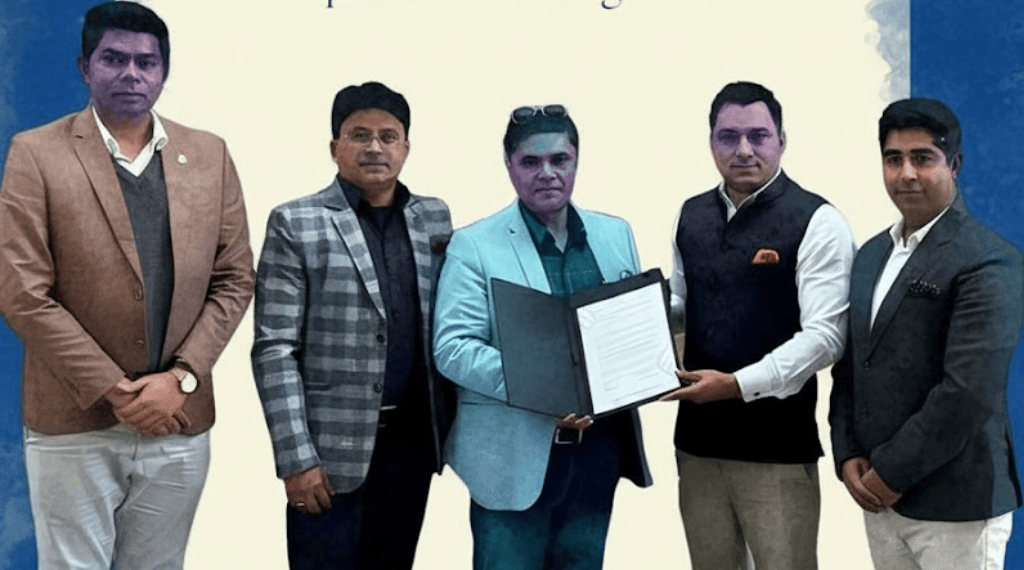
ALIVAA Hotels & Resorts has signed a memorandum of understanding with The Lalit Suri Hospitality School to establish a structured talent development partnership focusing on campus placements, industrial training and long-term skill development. The agreement positions the rapidly expanding hotel operator to secure access to hospitality graduates as India confronts an 11 million worker shortfall in the sector by 2035.
The partnership addresses a critical constraint for mid-market hotel operators expanding across India’s domestic travel markets. ALIVAA, founded in 2024 by former Lemon Tree Hotels President Vikramjit Singh and Inderpal Batra, has signed nine properties in its first year and targets 50 hotels within five years. Such aggressive expansion timelines demand talent acquisition strategies that outpace traditional recruitment cycles.
The Faridabad-based hospitality school, established in 2013 as part of The Lalit Hotels, Palaces & Resorts group, operates with a 330-student capacity across bachelor’s degree and diploma programmes affiliated with the National Council for Hotel Management and Catering Technology. The institution’s integration with an operating hotel chain provides students with in-house training access, creating a talent pool already socialised to operational standards.
Expansion velocity meets talent scarcity
India’s hospitality sector faces a paradox that makes education partnerships strategically essential rather than merely beneficial. The World Travel & Tourism Council projects the country will need to support 64 million tourism and hospitality jobs by 2035, up from 46.5 million in 2024. Yet current analysis indicates a 55–60% shortfall in skilled manpower across the sector, with nearly half of hospitality graduates deemed not employable in the knowledge economy due to insufficient soft skills and practical training.
For operators like ALIVAA, which recently integrated seven properties under its midscale brand The Hoften in Gurugram alone, the mathematics are unforgiving. Each new property requires trained staff across front office, housekeeping, food and beverage service and culinary operations. Traditional recruitment through job boards and hospitality recruitment agencies cannot deliver the volume or quality of candidates required to maintain service standards whilst scaling at velocity.
The MoU establishes structured pathways for The Lalit Suri School students to access ALIVAA properties for industrial training and campus placement. This provides the hotel operator with candidates who have completed six-month industry internships as part of their curriculum, reducing onboarding timelines and initial training costs.
Structural advantages of school-operator partnerships
The partnership model addresses several workforce development challenges simultaneously. Students gain exposure to contemporary hotel operations and brand standards before graduation. Operators influence curriculum relevance through industry feedback, ensuring graduates possess skills aligned with actual operational requirements rather than outdated institutional frameworks.
Critically, the arrangement provides ALIVAA with early access to graduating talent before competitors enter the recruitment cycle. In a market where 79% of Indian hospitality employers report difficulty finding skilled professionals, first-mover advantage in campus recruitment carries measurable value.
The Lalit Suri School’s affiliation with the NCHMCT and integration with The Lalit hotel properties gives ALIVAA access to students trained within established operational frameworks. This reduces the gap between academic preparation and workplace readiness that has historically plagued hospitality education in India.
Implications for hospitality talent strategy
The ALIVAA partnership signals a broader structural shift in how India’s expanding hotel sector approaches workforce development. The Union Budget 2026 proposal to upgrade the National Council for Hotel Management into a National Institute of Hospitality reflects governmental recognition that talent constraints threaten the sector’s growth trajectory.
Industry-academia partnerships are transitioning from occasional corporate social responsibility initiatives to core talent acquisition infrastructure. Hotel operators expanding into Tier-II and Tier-III cities, where local talent pools lack hospitality training, find education partnerships particularly strategic. Creating proprietary talent pipelines through school relationships provides more predictable workforce planning than competing for limited experienced professionals in mature markets.
For HR leaders managing hospitality portfolios, the partnership model offers lessons beyond hotel operations. Structured relationships with vocational institutions create measurable advantages in sectors experiencing rapid expansion combined with skills shortages. Early engagement with educational institutions allows employers to shape curriculum, establish brand recognition among graduating cohorts and build talent pipelines aligned with specific operational requirements.
Forward trajectory
ALIVAA’s partnership with The Lalit Suri School represents an emerging standard rather than an innovative exception. As India’s hotel industry pursues the government’s Vision 2047 target of one million branded hotel rooms—requiring an estimated 100,000 additional middle to senior management professionals—education partnerships will become infrastructure rather than initiative.
The hospitality sector’s talent crisis has forced operators to treat workforce development as a strategic planning function rather than a tactical HR responsibility. Mid-market brands expanding at scale cannot afford to rely on traditional recruitment channels that cannot deliver the volume or velocity of talent acquisition their growth trajectories demand. Structured partnerships with hospitality schools provide the systematic talent development infrastructure necessary to sustain expansion in a market where demand for skilled professionals significantly exceeds supply.