
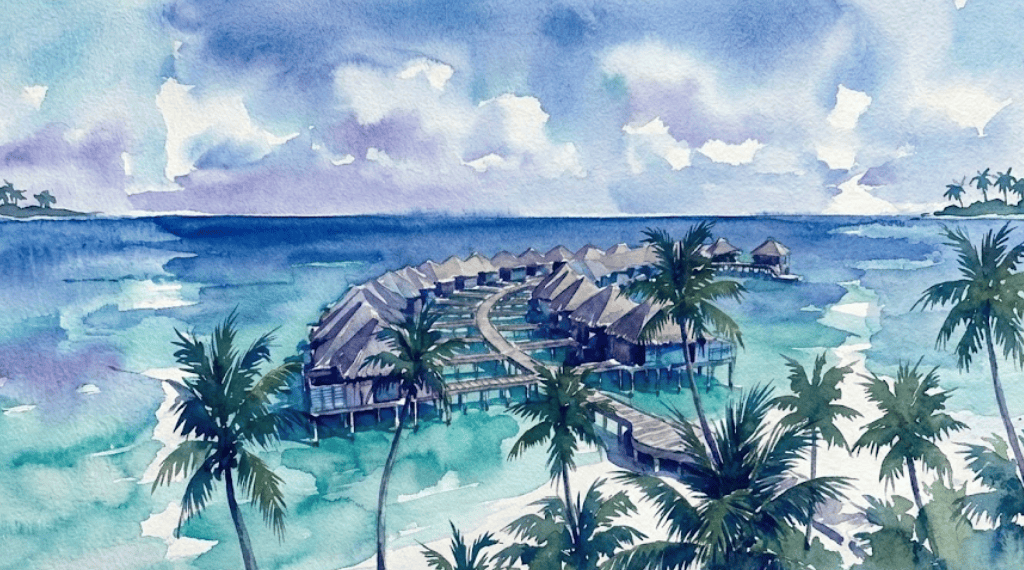
Meliá Hotels International has opened its first property in the Maldives following a $57.5 million acquisition that brings the Spanish hospitality group into one of the world’s most competitive luxury resort markets. Meliá Whale Lagoon Maldives, a 100-villa all-inclusive resort in South Ari Atoll, marks a strategic expansion for the company as it accelerates growth across premium destinations.
The resort, which opened in late January 2026, sits adjacent to the South Ari Marine Protected Area (SAMPA) – the Maldives’ largest protected marine zone and one of the few places on earth where whale sharks can be observed year-round. More than 726 individual whale sharks have been identified within the protected area, according to data from the Maldives Whale Shark Research Programme.
“The Maldives represent the essence of our purpose: to grow in the world’s most exclusive destinations and create unique moments in incomparable settings,” said Gabriel Escarrer, Chairman and CEO of Meliá Hotels International.
The property reaches guests via a 30-minute seaplane transfer from Malé International Airport – an arrival experience that has become synonymous with the Maldives’ ultra-luxury positioning and helps justify premium pricing across the archipelago’s resort market.
Ownership structure and transaction background
The resort’s arrival under the Meliá brand follows a change of ownership completed in late 2025. Sri Lankan conglomerate Browns Investments PLC sold the property, then operating as Barceló Whale Lagoon Maldives, to ASB Hotel Properties Maldives Private Limited for $57.5 million. The buyer is a subsidiary of Dubai-based Albwardy Investment, a diversified UAE holding company with annual revenues exceeding $1 billion.
The transaction valued the property at approximately $575,000 per key – a figure considered significant though not the highest recorded in the Maldives market, where ultra-luxury properties command premium valuations.
Albwardy Investment has steadily expanded its hospitality portfolio across four continents, partnering with international operators including Hyatt, Four Seasons and now Meliá. Current developments include a Four Seasons on Pongwe Beach in Zanzibar and Gran Meliá Dubai – Jumeirah. The Maldives acquisition brings the group’s total hospitality portfolio to approximately 1,400 rooms, with a further 1,100 under development.
Property and positioning
Meliá Whale Lagoon comprises 100 private villas configured across several categories: 63 Beach Villas, 30 Water Villas suspended above the lagoon, and seven Beach Suites featuring private plunge pools. The all-inclusive model targets couples, families and marine enthusiasts seeking year-round access to whale shark and manta ray encounters.
Facilities include four restaurants and bars offering Mediterranean and international cuisine, two infinity pools, and a spa with treatment rooms, sauna and steam bath. An entertainment programme encompasses live music, open-air cinema and children’s activities.
The positioning reflects broader trends in Maldives tourism, where operators increasingly blend luxury accommodation with experiential offerings. Marine-focused experiences have become a key differentiator, particularly in South Ari Atoll, which attracts tens of thousands of whale shark tourists annually.
Strategic context for Meliá
The Maldives entry aligns with Meliá’s stated strategy of accelerating growth in premium and luxury segments. The company currently operates more than 400 hotels across 45 countries, with 64 per cent of its portfolio in premium and luxury tiers. Its pipeline shows even stronger concentration, with 81 per cent of planned properties targeting these segments.
Meliá closed 2024 with 19 new hotel openings and plans at least 25 more in 2025. The company reported EBITDA exceeding €525 million in 2024, with luxury properties now contributing 40 per cent of operating revenue and RevPAR growth exceeding 30 per cent across its high-end brands.
The Spanish group has been recognised as Europe’s most sustainable hotel company by S&P Global and achieved Top Employer Large Enterprise 2025 certification – credentials it increasingly leverages in attracting both guests and owner-partners in markets where sustainability matters to high-net-worth travellers.
Market conditions
Meliá enters the Maldives at a moment of record-breaking performance for the destination. Tourism receipts in 2025 exceeded $5.4 billion, surpassing the national target of $5 billion, according to Visit Maldives Corporation. Arrivals reached 2.25 million, a 9.8 per cent increase on 2024, with approximately 73 per cent of visitors choosing luxury resorts.
The hospitality market is projected to grow from $2.51 billion in 2025 to $3.91 billion by 2030, representing a compound annual growth rate of 9.24 per cent. However, operators face emerging headwinds including planned increases to airport taxes and the Tourism Goods and Services Tax (TGST) in 2026, alongside growing competition from alternative destinations including Seychelles, Mauritius and Indonesia.
For HR and talent leaders, the opening creates localised employment in a market where resort operations drive significant job creation. The Maldives currently operates 183 resorts with combined capacity of more than 45,000 beds, requiring substantial workforce development and retention strategies in a geographically dispersed operating environment.
Outlook
Meliá’s arrival signals continued international appetite for Maldives assets despite pricing pressures and environmental concerns including sea-level rise and coral degradation. The company’s existing relationship with Albwardy Investment – which also owns the Meliá-operated Desert Palm in Dubai – suggests a partnership model that could facilitate further expansion.
With its portfolio now present in 13 of the 15 most visited countries globally, Meliá continues pursuing what it terms “asset-light” growth through management and franchise agreements. The Maldives debut, secured through an existing owner relationship, exemplifies this approach while positioning the brand in a destination synonymous with global luxury travel.