
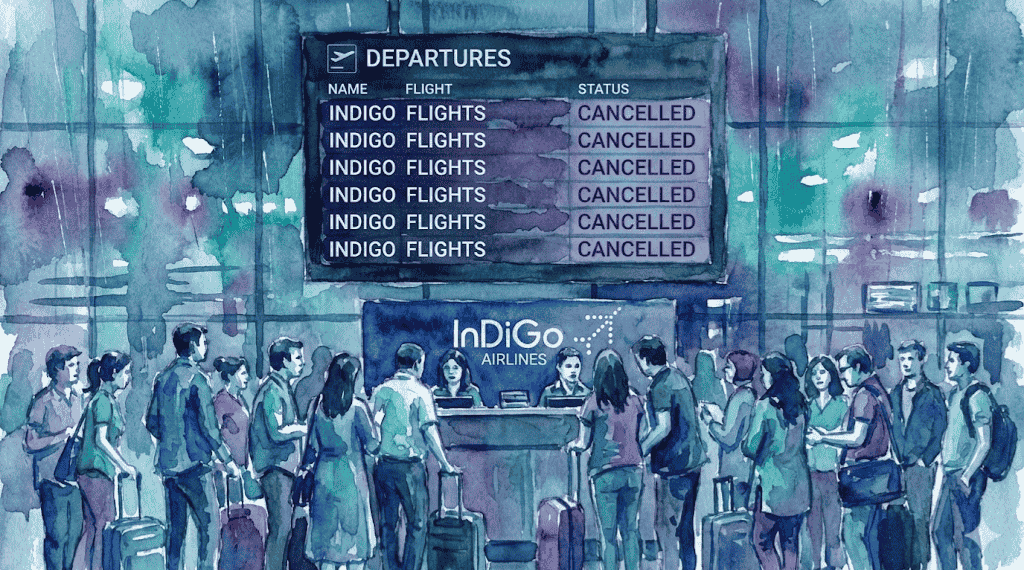
IndiGo’s operational crisis resulted in over 2,100 flight cancellations across India in early December, stranding thousands of passengers at airports nationwide. But the numbers tell only part of the story. The disruption revealed something far more instructive for HR and service leaders: the critical difference between having a crisis response and actually managing a crisis.
The airline struggled to implement Flight Duty Time Limitation (FDTL) regulations that other Indian carriers had adapted to without major disruption. The new rules (mandating 48 hours weekly rest for pilots, up from 36 hours, limiting night landings from six to two per week, and capping flying hours) were announced in 2024 with phased implementation beginning in July 2025.
IndiGo, commanding over 60% of India’s domestic market, admitted it “failed to plan properly” ahead of the 1 November deadline. By 5 December, more than 1,000 flights were cancelled in a single day.
The airline executed crisis response effectively. CEO Pieter Elbers issued apologies. Full refunds were announced, cancellation fees waived, hotel accommodations arranged. The board established a Crisis Management Group on 7 December.
What IndiGo lacked was crisis management: the preparatory work of workforce planning and building operational resilience before regulations take effect. The airline’s model of high crew utilisation with minimal buffers delivered efficiency until regulations changed. Then the system collapsed.
The Federation of Indian Pilots noted that other airlines had adapted without major impact, pointing to IndiGo’s “years of lean manpower planning” and delayed hiring as root causes.
A widely circulated letter from IndiGo employees described their experience: “We did not design rosters. We did not freeze hiring. We did not delay preparedness. Yet we carried the entire public cost.”
Ground staff at major airports managed hours of passenger confrontations without clear communication from management or authority to resolve issues. Staff worked extended shifts assisting desperate travellers (families missing weddings, patients unable to reach hospitals, business travellers facing employment consequences) with limited ability to help. Some reported not just verbal abuse but gendered harassment.
The employees demanded public acknowledgement of the planning failure and assurance such a crisis wouldn’t recur. Their letter stated: “The timing, scale, and pattern of cancellations aligned exactly with the new regulatory deadline, making it impossible to ignore what is visible to everyone on the ground.”
British Airways learned similar lessons in May 2017 when an IT system failure grounded 75,000 passengers over a Bank Holiday weekend. The most damaging aspect wasn’t the technical breakdown. It was that frontline staff were “as poorly informed as the passengers.” BA had backup systems and disaster recovery protocols. What failed was the ability to manage the unfolding crisis at ground level. The experience cost approximately £80 million.
Southwest Airlines repeated the pattern in December 2022. Outdated crew-scheduling software combined with lean staffing collapsed under winter weather pressure, cancelling over 15,000 flights in eight days. Warning signs had been visible months earlier. Southwest’s pilot union warned the company was “one IT router failure away from a complete meltdown.” The airline’s tech workforce had declined by 27% between 2018 and 2021 whilst operations grew.
These crises reveal a pattern. Running lean operations delivers measurable quarterly benefits. Investing in workforce buffers and operational resilience appears as costs on balance sheets until the day it prevents catastrophic failure.
IndiGo’s situation wasn’t fundamentally about apologising or refunding passengers. It was about preparation. Real crisis management happens in the unglamorous months before disaster strikes: adequate staffing, roster flexibility, systems capable of handling regulatory changes, frontline employees with actual authority during disruptions.
The hospitality and service sectors face similar pressures. Properties operate housekeeping departments at minimum staff levels. Restaurants run kitchens without operational buffers. Contact centres optimise staffing with no accommodation for unexpected volume spikes. These approaches work until they catastrophically don’t.
IndiGo has committed to returning to normal operations between 10-15 December. The Indian government granted temporary exemptions from some FDTL rules until 10 February and ordered a high-level inquiry.
Beyond immediate operational recovery, the crisis raises questions about organisational culture in service industries. When companies market “people-centric” values but run operations that leave frontline staff without support during crises, employees notice the gap between rhetoric and reality.
The lesson isn’t about IndiGo specifically. It’s about the hidden costs of running organisations at maximum efficiency with minimal resilience. IndiGo’s experience offers a mirror for any service organisation to examine its own preparedness. Rather than waiting for a crisis to reveal weaknesses, leaders might ask themselves five uncomfortable questions:
Are we confusing crisis response plans with crisis management? Having refund protocols and apology templates ready is necessary but insufficient. Can your organisation actually prevent foreseeable crises, or are you merely prepared to apologise efficiently when they occur?
Do our frontline staff have the authority to manage disruptions, or are they human shields? When operations collapse, can your customer-facing employees actually solve problems, or are they structurally powerless to help whilst absorbing anger for decisions made elsewhere?
If we’re running operations at 95% capacity with minimal buffers, what happens at 100%? Efficiency looks brilliant on quarterly reports until unexpected demand, regulatory changes, or staff shortages arrive. Have you stress-tested your systems against scenarios that would require 110% capacity?
Would our executives be willing to physically staff the front desk, check-in counter, or customer service line during the next crisis? If leadership wouldn’t face customers during operational breakdowns, why should frontline staff bear that burden alone? Visible accountability during crises either exists or it doesn’t.
Does the gap between our stated values and operational reality only become visible during a crisis? If your organisation markets “people-first” culture whilst running skeleton crews and expecting staff to absorb the consequences of cost-cutting decisions, employees already know. The only question is whether leadership knows.
These questions don’t have comfortable answers. But organisations that ask them before crisis strikes (rather than after 1000s cancelled flights) stand a considerably better chance of maintaining both operational stability and the trust of the people who make operations possible.