
In the whirlwind of modern business, where we’re all chasing agility and navigating constant complexity, it’s easy to lose sight of the one thing that truly anchors an organisation: ethical leadership. This isn’t just about ticking compliance boxes or ‘doing the right thing’. It’s about intentionally building a culture where trust is the real currency, and integrity is the scaffolding for any success that’s built to last.
What ethical leadership actually looks like
At its heart, genuine ethical leadership has very little to do with simply following a rulebook. It’s about actively living a set of values. The leaders who truly master this are the ones who guide their teams through murky, ambiguous situations with unwavering honesty, transparency and a profound sense of responsibility. They don’t just laminate the company values; they make them part of the daily operational fabric through their own decisions and behaviours.
Think about a high-performance engineering team; every single component must be perfectly aligned for the whole thing to work safely and effectively. It’s exactly the same with leadership. There must be an absolute, non-negotiable alignment between what is said and what is done. It’s this consistency that gives your teams, your stakeholders, and your customers the confidence to invest in you.
Creating the conditions for integrity to flourish
Imagine your workplace culture is a garden. In this scenario, the best leaders aren’t inspectors, walking around with a clipboard looking for weeds. They are gardeners. Their job is to plant the seeds of openness, consistently water them with accountability, and foster an environment where respect and ethical conduct can properly thrive.
These leaders make sure transparency is a lived reality, not just another corporate buzzword. They create a space where people feel genuinely safe to raise concerns, to question those grey areas, and to learn together from ethical challenges. It’s very much like the Ritz-Carlton philosophy, where any employee is empowered to solve a guest’s problem. Ethical leadership builds on this sort of principled empowerment.
Building the pillars of trust, one action at a time
Trust doesn’t just appear out of thin air; we all know it’s earned, decision by decision, promise by promise. Ethical leaders understand this intrinsically. Their commitments aren’t vague intentions; they are concrete promises that are seen through with rigour. They communicate with clarity, follow through on their word, and treat fairness as a basic expectation, not a bonus.
I remember supporting a leadership team through a very difficult restructuring across their Asia Pacific operations. It was their transparent, values-first approach that held the team together. Even with all the uncertainty, trust didn’t crumble because their ethical stance wasn’t just for the good times; it was structurally embedded in how they operated.
Living the company values, not just framing them
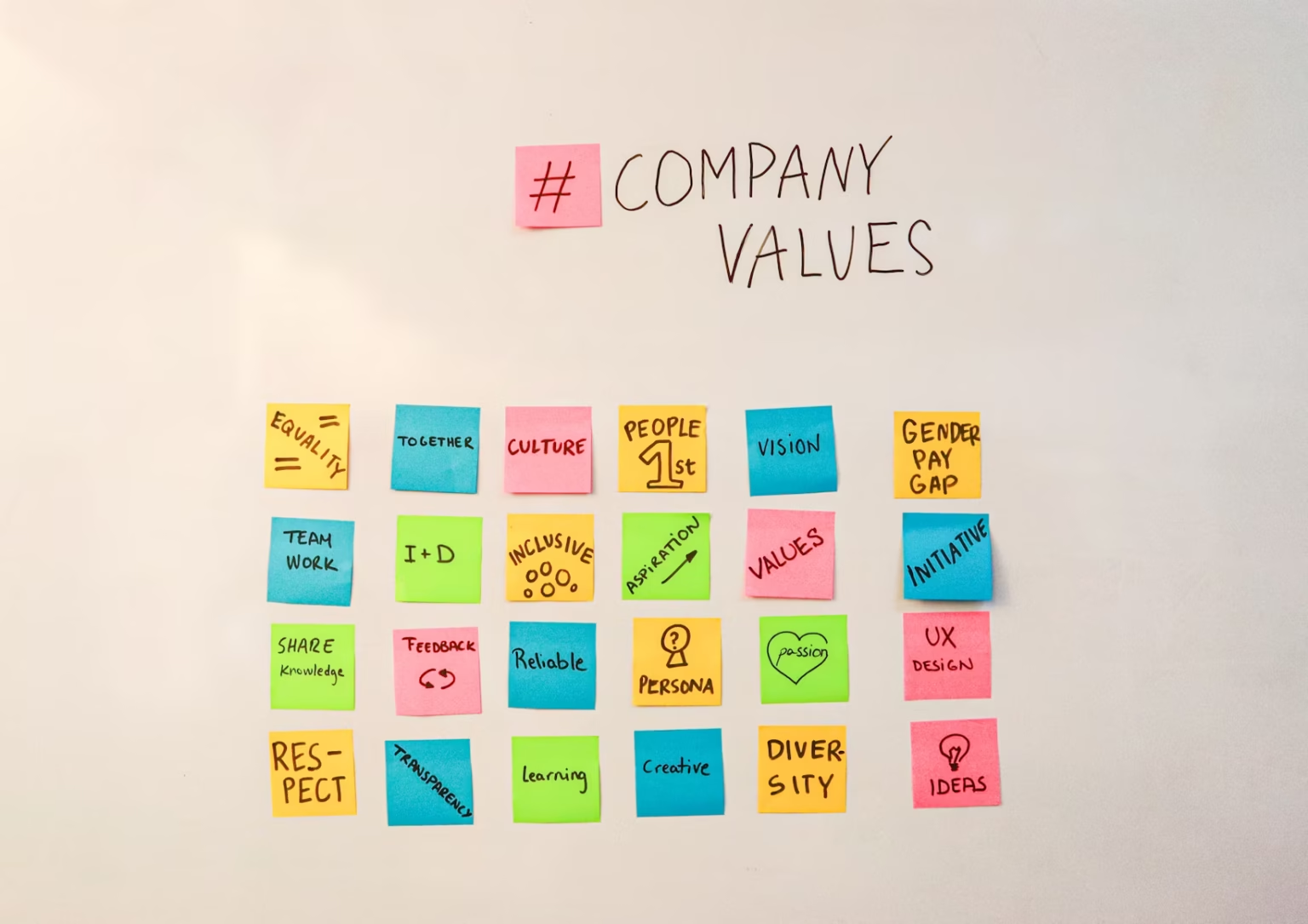
Let’s be honest, a values poster hanging in the reception area is completely meaningless if it doesn’t show up in the daily behaviour of leaders. Ethical leaders are the ones who translate those lofty ideals into everyday actions. They don’t just expect fairness; they model it. They don’t just demand accountability; they invite it for themselves. They lead with authenticity, not just authority.
Their real influence comes from this conviction, which is deeply tied to the organisation’s mission and a genuine consideration for the impact on their people. These are the leaders who don’t just set the standard; they become the standard.
A culture that learns to sustain itself
Think of a well-run hotel brand, where excellent service isn’t a one-off training session but is reinforced daily in every interaction. In the same way, ethical leadership creates a self-sustaining culture. It’s about investing in the systems, training and psychologically safe channels that encourage good decision-making from everyone, not just those at the top.
When integrity becomes the norm rather than the exception, your people don’t just comply with the rules; they start to believe in them. And when that belief is what drives behaviour, you’ve created a workplace where misconduct struggles to find oxygen and trust becomes a legacy.
The Real Bottom Line
Ethical leadership has never been a ‘soft skill’. It’s a hard-edged strategic imperative. In any organisation that’s serious about the future, it’s never the flashiest idea that wins the day. It’s the one most deeply anchored in trust. The very best leaders I’ve had the privilege of working with, whether in precision engineering or creative hospitality, all understood that integrity isn’t just a personal trait. It’s a system, a language, and an unwavering commitment.
And with that commitment in place, organisations don’t just get by. They flourish.