IHG Opens First International Full-Service Hotels in Two Japanese Cities with ANA Holiday Inn
IHG Hotels & Resorts has opened two ANA Holiday Inn properties in Japan within 24 hours of each other, establishing the Holiday Inn brand's first international full-service presence in Sanda…
 News Desk
5 min read
News Desk
5 min read
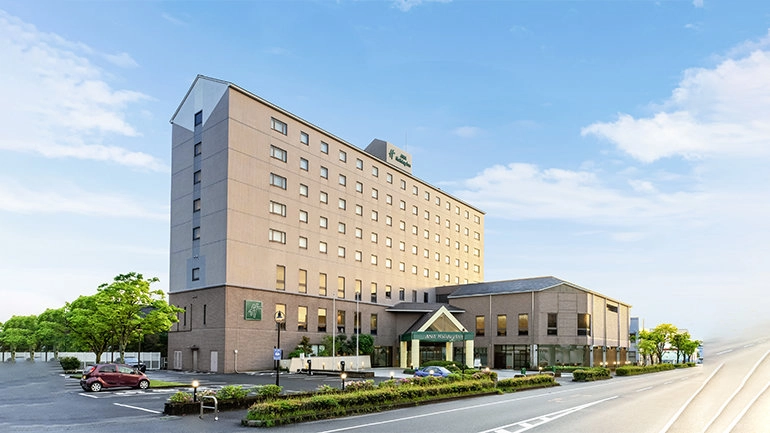
IHG Hotels & Resorts has opened two ANA Holiday Inn properties in Japan within 24 hours of each other, establishing the Holiday Inn brand’s first international full-service presence in Sanda City and Tosu City. The back-to-back openings mark a purposeful push into secondary Japanese markets and reinforce a conversion-led growth model that is reshaping how global hotel groups expand in the region.
Two firsts, two cities
ANA Holiday Inn Kobe Sanda welcomed its first guests on 27 April 2026, followed by ANA Holiday Inn Tosu on 28 April 2026. Both properties are operated by Select Hotels Group and represent a meaningful departure from the metropolitan focus that has historically dominated international brand expansion in Japan.
Sanda City, in Hyogo Prefecture, sits between Kobe and Osaka in the heart of the Kansai region. The 130-room property is one minute’s walk from Woody Town Chuo Station on the Kobe Electric Railway and less than ten minutes from the Kobe-Sanda Interchange. Business travellers will find proximity to the Hokusettsu Sanda Technopark, while the broader area offers leisure options including the Kobe Sanda Premium Outlet and the riverside paths of the Hiratanigawa Greenway.
Tosu City, in Saga Prefecture, occupies a strategic node in northern Kyushu where the Kyushu, Nagasaki and Oita expressways converge. The 127-room hotel is five minutes by car from JR Tosu Station and approximately 40 minutes from Fukuoka Airport, positioning it as a natural base for travel across the island.
The conversion model driving IHG’s pace
Both openings are conversions: rebranded existing properties brought up to Holiday Inn standards rather than purpose-built from the ground up. This fits a pattern IHG has been executing with notable discipline across Japan and the wider Asia Pacific region.
According to IHG, conversions accounted for around 60% of the group’s openings and 40% of organic signings in the first quarter of 2025. The approach compresses time-to-market considerably and allows operators to establish a brand footprint in secondary cities before competitors arrive. For HR leaders in the hospitality sector, it also introduces a distinct challenge: integrating teams that may carry deep local knowledge but limited exposure to international brand protocols and service standards. The two new properties bring the total of Holiday Inn open and pipeline hotels across Japan to 15.
A partnership approaching two decades
The ANA Holiday Inn brand is the product of a strategic alliance formalised in December 2006, when IHG partnered with All Nippon Airways to establish IHG ANA Hotels Group Japan, operating through nine hotel brands including those co-branded with ANA.
That alliance gives IHG a distinctive market position, blending international brand recognition with deep integration into Japan’s domestic aviation network. The partnership extends beyond commercial coordination: IHG and ANA have committed to joint initiatives covering sustainable regional development and next-generation talent development in the hospitality sector. Those commitments take on added weight as both organisations now expand into cities where hospitality career infrastructure is less established.
Regional Japan: where the investment is moving
The choice of Sanda and Tosu is not incidental. Secondary destinations and regional hubs have increasingly attracted investment as travellers seek broader cultural experiences and less congested alternatives to Japan’s traditional gateway cities. Both cities were previously without an internationally branded full-service hotel, a gap that creates first-mover advantages for IHG but also places real demands on local hiring and workforce development.
IHG has been building regional momentum across Japan since at least mid-2025, when it cited Expo 2025 Osaka as a catalyst for accelerating its brand presence in the Kansai region, where it expanded to ten open hotels across seven brands. Sanda and Tosu extend that arc into adjacent but lower-profile markets, completing a geographic strategy that is now moving well beyond Japan’s gateway cities.
Japan’s sustained inbound tourism growth has made regional properties increasingly viable rather than speculative, and the rise in domestic travel demand reinforces the case further.
What each property delivers
Apple Road, the signature restaurant at each hotel, serves a daily buffet breakfast and is open for lunch and dinner. Both properties feature six flexible meeting and event spaces capable of accommodating up to 250 guests. The Kids Stay & Eat Free programme applies to children aged 12 and under at both locations.
ANA Holiday Inn Kobe Sanda also includes a Japanese-style room with traditional tatami flooring and a low-set layout, reflecting the increasingly common approach among international brands of offering locally adapted configurations to compete for domestic Japanese travellers, not only inbound international guests.
What comes next
The Sanda and Tosu openings follow Holiday Inn’s recent debut in Sapporo and Karuizawa, confirming an ongoing regional expansion arc for the brand across Japan. IHG has signalled continued pipeline activity in the country, with further Holiday Inn signings likely in secondary city markets.
The conversion-heavy strategy enabling this pace raises a structural question for senior leaders: rapid regional growth is achievable; sustaining brand consistency across a distributed footprint, in markets where hospitality talent pipelines are thinner and international service benchmarks less embedded, requires sustained investment in people. That is the longer-term test these two openings have quietly set in motion.