G6 Hospitality reported a portfolio of 1,607 hotels across the United States and Canada as of November, as the Motel 6 and Studio 6 parent added to its economy lodging network and widened its extended-stay pipeline. The company said it recorded 90 additions between January and September, compared with 54 in the same period of 2025.
The distinction matters: the 90 include additions to both the operating network and the development pipeline. They are not 90 hotel openings. In its 18 November announcement, G6 said the first two quarters accounted for 43 and 34 properties respectively across its network and pipeline. In the third quarter it added 13 hotels to its network.
G6 Hospitality expands its franchise network
The company said it signed franchise deals in 22 markets, including locations in Texas, Georgia and the Carolinas. Named openings included Studio 6 hotels in Lithia Springs, Georgia, and Dryden, Ontario, as well as Studio 6 Suites in Warsaw, Indiana, and Motel 6 in Aberdeen, North Carolina. The mix shows that expansion comes from several formats and markets, rather than a single uniform roll-out.
G6, which is part of PRISM, is also developing Studio 6 Plus. The company launched the upper-economy extended-stay brand in April. Its pipeline now stands at more than 35 hotels according to G6, including an 18-hotel commitment from Natson Hotel Group across six states and a five-hotel agreement with Kautilya Group for a planned Northeast entry. Announced developments also include Horn Lake, Mississippi, and Marshall, Illinois. These figures describe a development pipeline, not a tally of hotels already trading under the new flag.
The operating question behind the growth
Franchising lets a company widen distribution while local owners take responsibility for bringing individual properties into the system. For owners considering extended stay, the relevant comparison is how a building performs on a longer booking pattern. Room configuration, laundry, cleaning frequency and the mix of demand from employers and individual guests can all shape the operating case.
The difference between development commitments and trading hotels is also useful in comparing unrelated franchise programmes, such as Ginger’s planned expansion with Lords Hotels & Resorts. For G6, the next measure will be how many Studio 6 Plus commitments become operating hotels, rather than how quickly the signed pipeline grows.
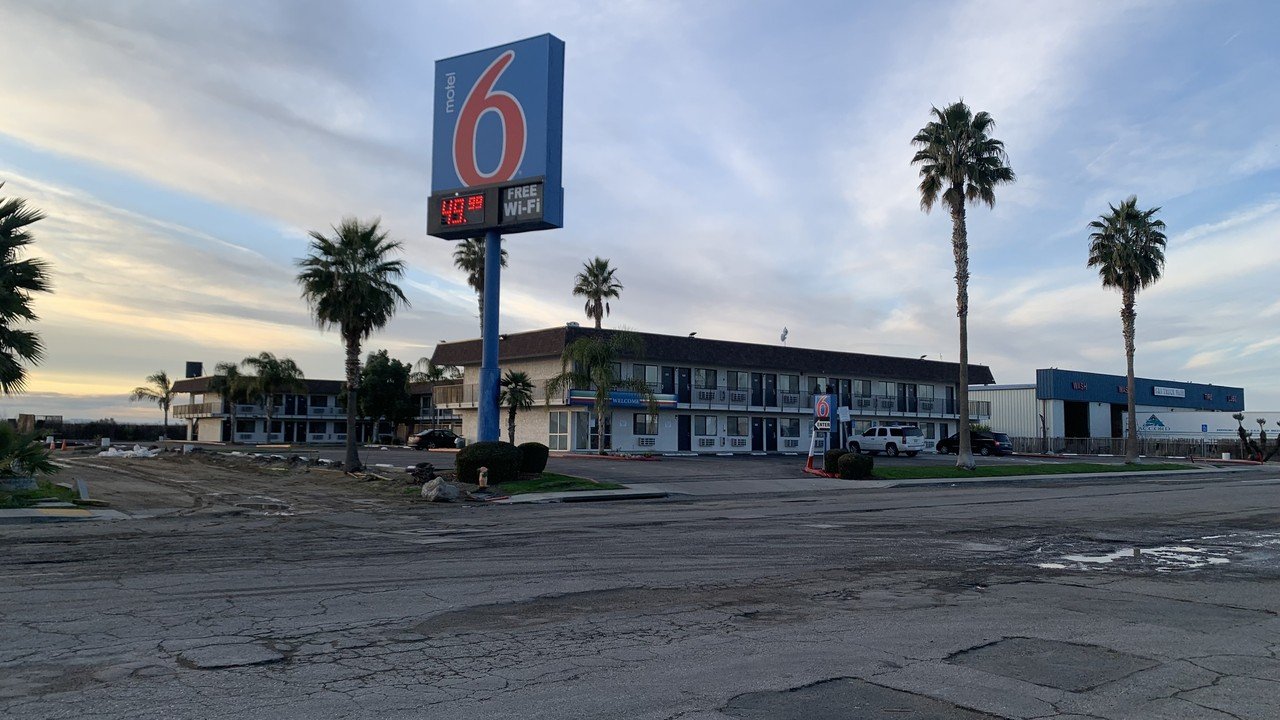
Archive photograph of a Motel 6 in Lost Hills, California. Busition via Wikimedia Commons, CC BY 4.0. Not one of the announced additions. Cropped and resized. Photo source · Licence.