Radisson Shanghai Jing’An has reopened in the former Shanghai Hotel following a renovation. The brands’ 23 November announcement gives the operating opening date as 29 October. Jin Jiang Radisson Hotels and Radisson Hotel Group say the property has 357 accommodation units, split between 208 hotel rooms and 149 serviced apartments.
The 91.8-metre tower opened in 1983 and, according to Radisson, was Shanghai’s tallest building at the time. The hotel still occupies its Wulumuqi North Road address in the Jing’an Temple district. The latest change brings the building into Radisson’s upscale portfolio with an interior scheme informed by the brand’s Scandinavian design language.
Radisson Shanghai Jing’An serves two stay patterns
The guest rooms and apartments are not equivalent inventory. The hotel’s accommodation pages describe kitchen and living space in the apartments, with one- and two-bedroom configurations available. The format gives guests staying longer a different proposition from a standard hotel room. It can also require different booking rules, housekeeping schedules and expectations around what is included in the rate.
The property has two public dining outlets. 26 North uses Nordic influences with local Shanghai ingredients, while FIKA Café & Bar operates in the lobby. Other shared facilities include a fitness centre, a yoga room, self-service laundry and three meeting rooms. The hotel is within walking distance of Jing’an Temple and its metro station.
An existing tower, not a new build
For developers and operators, the reopening is useful as an example of how an established city hotel can change the balance of its accommodation without starting with a new building. A hotel and apartments under one roof can share some facilities and service teams, but residents and short-stay guests do not necessarily use those services at the same frequency or at the same times.
The key question after reopening is how well the two offers work together in practice. A longer-stay guest may value a usable kitchen and dependable laundry more than daily restaurant service. A short-stay guest is more likely to judge convenience at arrival and departure. Delivering both will depend on the property’s staffing and service routines as much as on its renovated interiors. In the same city, the separately planned Ritz-Carlton Reserve Shanghai illustrates a different approach to positioning a hotel within an urban market.
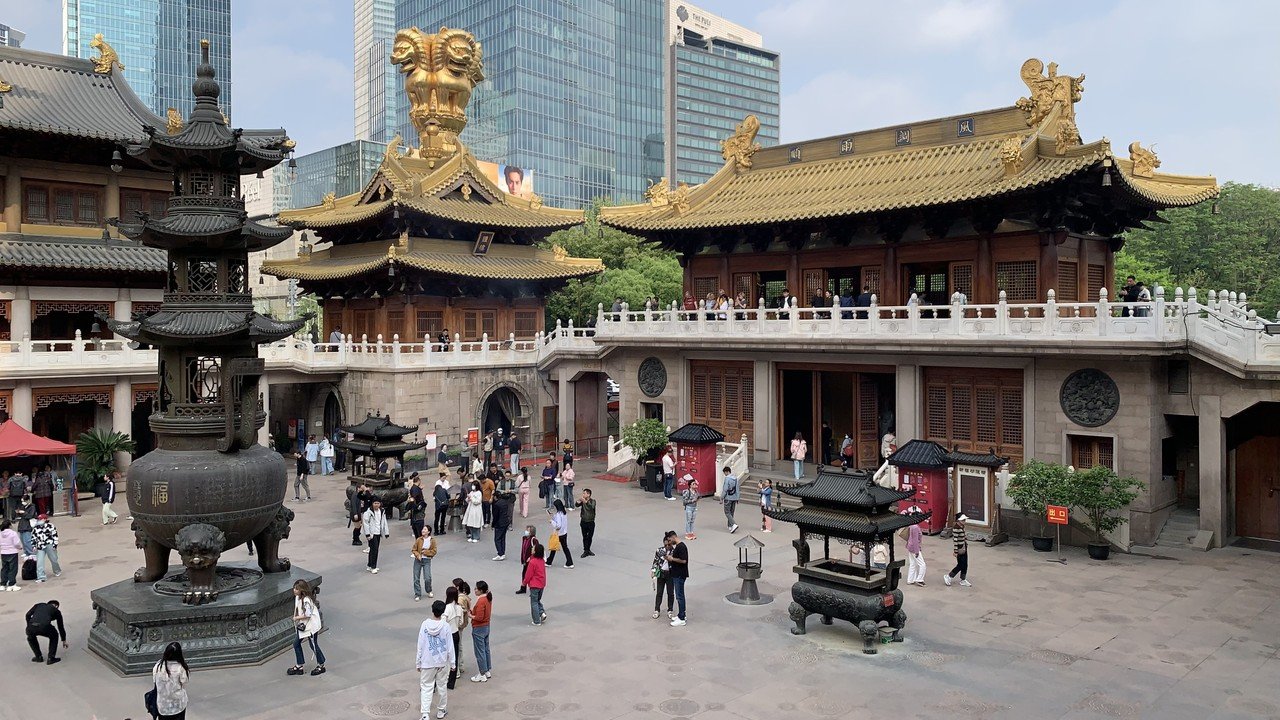
Jing’an Temple in Shanghai. Destination photo, not the hotel: Chainwit. via Wikimedia Commons, CC BY 4.0. Cropped and resized. Photo source · Licence.