
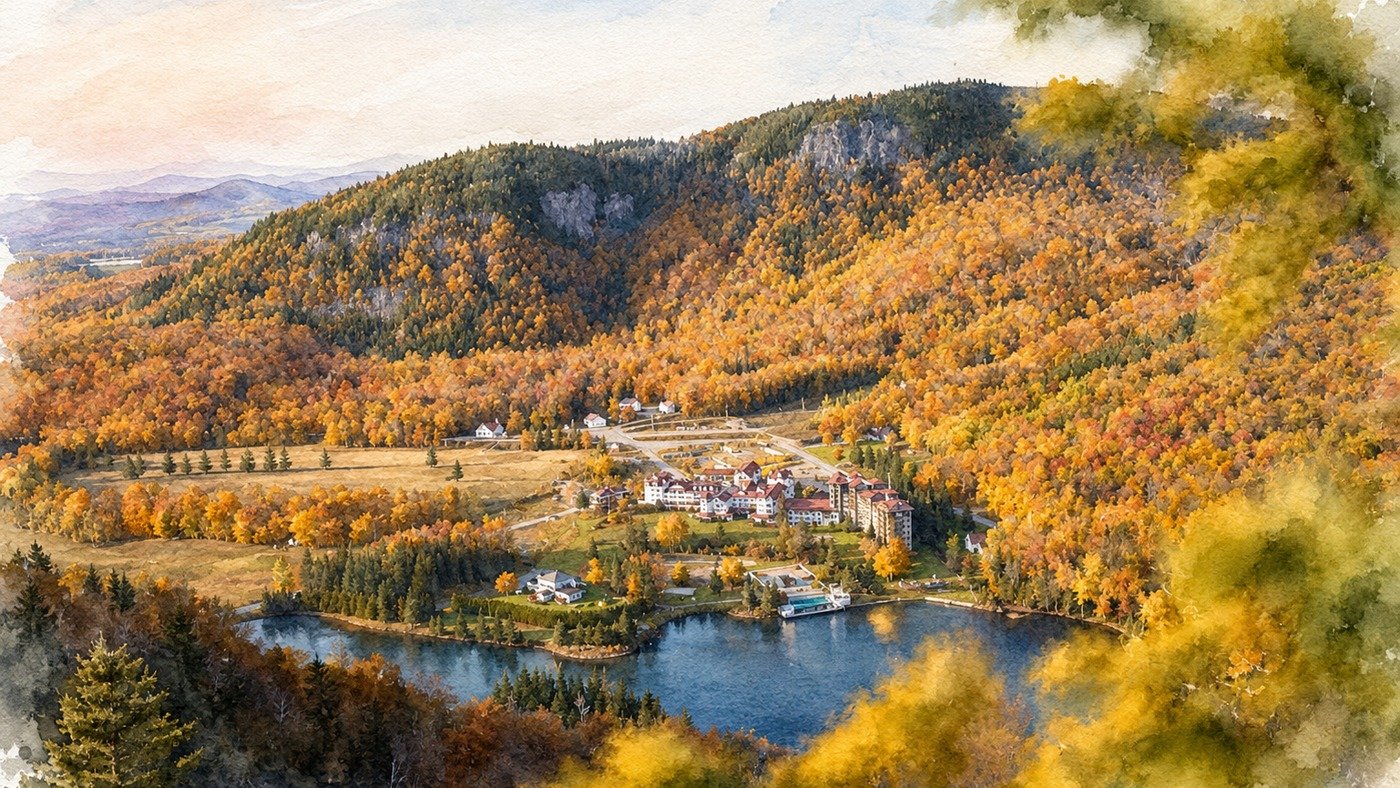
Luxury travellers are beginning to redraw the seasonal map of high-end hospitality, with new 2026 booking data from Global Travel Collection pointing to stronger demand for autumn travel, cooler destinations, private accommodation and less crowded alternatives to traditional Mediterranean hotspots.
The shift is not a rejection of luxury travel. It is a recalibration of how wealthy travellers want to experience it. According to Global Travel Collection, European summer bookings are down 10% year on year, while European autumn bookings are up 25%. The pattern suggests that affluent travellers are still spending, but are becoming more selective about when and where they travel.
For hotels and resorts, this matters because the traditional summer peak has long shaped pricing, staffing, inventory management and destination marketing across Europe. If high-value travellers continue to move towards September, October and other shoulder-season windows, luxury operators will need to rethink how they plan demand, package experiences and deploy teams across the year.
The most immediate pressure point is Europe. Destinations such as the Amalfi Coast, Santorini and other established summer luxury markets remain highly desirable, but many travellers are now looking for similar coastal experiences without the same levels of crowding, pricing pressure and access constraints. Global Travel Collection’s data points to growing demand for Croatia, Montenegro, Albania and quieter parts of Greece, with Puglia, Paros and the Albanian coast emerging as notable alternatives.
This does not mean the Mediterranean is losing its relevance. It remains the leading luxury region in the data. What is changing is the internal distribution of demand. Instead of concentrating almost entirely around the most familiar names, luxury travel is spreading into neighbouring destinations that can offer coastline, cuisine, privacy and a sense of discovery without the saturation associated with peak-season hotspots.
For boutique hotels, villas and yacht operators, that shift creates opportunity. It rewards properties that can offer intimacy, strong local identity and access to experiences beyond the obvious tourist circuit. It also creates a development signal for investors and hospitality groups assessing markets that sit just outside the most established luxury corridors.
Cooler destinations are also gaining ground. Global Travel Collection identifies Nordic and Arctic regions as among the fastest-growing luxury segments for 2026, with demand building around private lodges, expedition cruises and nature-led wellness. Northern Europe, including Germany, Denmark and Poland, is seeing stronger interest, while Greenland is moving from niche curiosity to a more serious bucket-list destination.
This fits a broader change in luxury behaviour. Heat, crowds and overexposure are weakening the appeal of some traditional summer destinations, while wilderness, space and climate comfort are gaining status. For high-end travellers, luxury is increasingly defined less by visibility and more by control: control over temperature, privacy, access, pace and the ability to avoid over-touristed environments.
The privacy trend is visible in accommodation choices. Villas and private accommodation bookings are up 7% year on year, reflecting continued demand for space, exclusivity and reduced exposure to crowded hotel environments. This creates both a challenge and an opportunity for hotels. Luxury resorts can no longer assume that their service proposition alone will outweigh the appeal of private stays. They need to offer more flexible, residential-style inventory, stronger villa programmes or service models that bring hotel-level hospitality into private accommodation settings.
The same logic applies to multi-generational and group travel. Families and private groups are often seeking the comfort of a home-like environment with the security and service depth of a hotel. Operators able to combine privacy with staff, dining, wellness and curated experiences will be better placed to capture this demand than those relying solely on conventional room-led inventory.
Domestic US luxury travel is also showing strong momentum. Global Travel Collection reports that US autumn luxury bookings are up 40% year on year, led by coastal areas in Hawaii, Miami and Rhode Island, as well as high-end ranch properties. For American luxury travellers, staying within the country does not necessarily mean trading down. It can mean choosing familiar geography while upgrading privacy, service, setting and experience.
This is important for US hotels because it suggests that domestic luxury demand is not simply a fallback when international travel becomes inconvenient. It is becoming a deliberate choice for some travellers who want shorter journey times, lower friction and premium experiences closer to home. Ranches, coastal resorts and high-end domestic retreats are therefore competing not only with each other, but with Europe, the Caribbean and long-haul luxury destinations.
Holiday travel is also being booked earlier. For the 2026 festive season, the Caribbean leads luxury holiday demand, with Anguilla, Turks and Caicos and the Cayman Islands among the top destinations. Japan and Mexico are also early leaders among international travellers planning ahead.
For hotel revenue teams, early festive demand is useful, but it also raises the stakes. High-end travellers booking earlier may expect better access, more tailored itineraries and stronger pre-arrival planning. The booking itself is only the beginning of the relationship.
The broader message for hospitality is clear: luxury demand is not softening, but it is becoming more strategic. Travellers are using timing, geography and accommodation type to avoid friction. They are still paying for access, comfort and distinction, but they are less willing to endure overcrowding simply because a destination has status.
For luxury hotel groups, the winners will be those that understand this shift as an operational issue, not just a marketing trend. Shoulder seasons will need richer programming. Cooler destinations will need stronger storytelling. Villas and private residences will require service models that protect privacy without losing hospitality. Established summer markets will need to defend their value by solving the problems of crowding, heat and scarcity.
The old luxury formula was to follow the season and pay more for a better version of what everyone else wanted. The new formula is quieter and more tactical: travel when others do not, go where demand is forming rather than peaking, and choose accommodation that gives greater control.
For hospitality, that is not a small change. It is a different calendar, a different map and a different definition of luxury.