Accor Global Leadership Council Identifies Five Corporate Travel Priorities Shaping 2026 Hospitality Performance
Accor has convened the third edition of its Global Leadership Council, bringing together senior travel buyers and corporate leaders from 18 organisations across Europe and North America to examine the…
 News Desk
6 min read
News Desk
6 min read
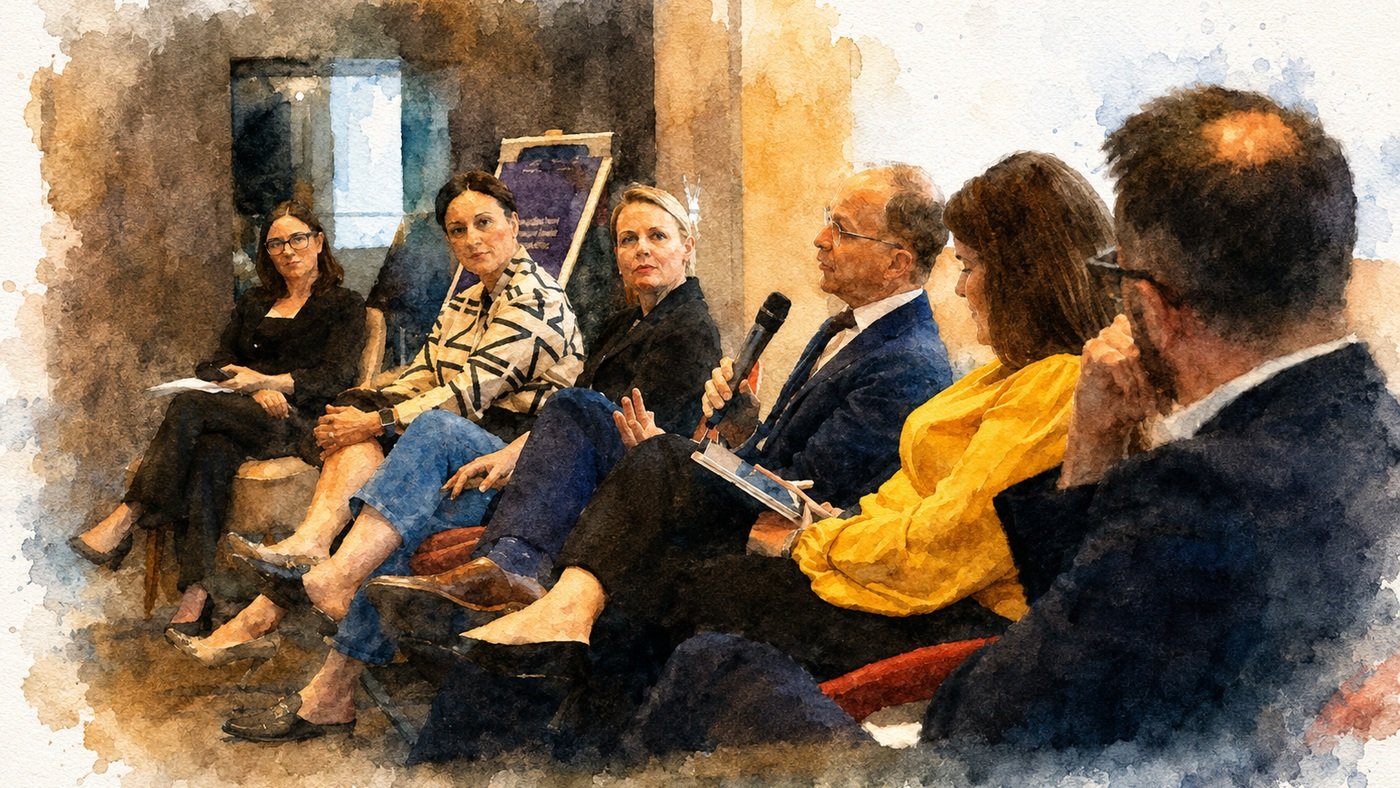
Accor has convened the third edition of its Global Leadership Council, bringing together senior travel buyers and corporate leaders from 18 organisations across Europe and North America to examine the trends expected to shape hospitality performance in 2026 and beyond.
The forum represented around three million business travellers and brought Accor executives together with global corporate clients for discussions on the future of business travel, managed hotel programmes, loyalty, technology, pricing and the traveller experience. The council was opened by Accor Chairman and Chief Executive Officer Sébastien Bazin and included two days of discussions with senior Accor executives and brand leaders.
The 2026 edition of the council comes at a time when business travel is no longer being judged purely by volume recovery. Corporate clients are looking more closely at value, visibility, traveller wellbeing, sustainability, data quality and the operational efficiency of managed travel programmes. For hotel groups, this changes the nature of the corporate relationship. The conversation is moving beyond rate negotiation into partnership, performance and trust.
In its 8 July account of the council, Accor identified five priorities for corporate hotel programmes: strategic partnerships, balancing cost pressure with traveller experience, practical use of artificial intelligence, more agile pricing structures and greater visibility of negotiated rates across booking channels.
The first priority is a shift from transactional supplier relationships to strategic partnership. Corporate travel buyers are looking for hotel partners that can work with them across changing business needs, market volatility and evolving employee expectations. In practice, that means hotel groups are being asked to provide more than rooms at agreed rates. They need to offer flexibility, data transparency, programme support and an understanding of how travel fits into wider business performance.
This is an important signal for the hospitality sector. Corporate travel buyers are under pressure to manage cost, but they are also expected to support employee productivity, safety, wellbeing and retention. A hotel partner that can help solve those challenges will be better positioned than one competing only on price.
The second trend is the growing tension between cost control and traveller experience. Companies are still focused on value, but there is increasing recognition that the quality of the trip matters. A poorly managed business trip can affect productivity, wellbeing and employee satisfaction. A well-managed trip, by contrast, can support retention and help companies demonstrate care for travelling employees.
For hotel operators, this creates a more demanding corporate travel environment. It is no longer enough to offer a negotiated rate and a standard room. Corporate clients want consistency, comfort, personalisation, loyalty recognition, easier booking and fewer points of friction. This places pressure on hotel brands to align sales, operations, loyalty, distribution and property-level service delivery.
The third priority is artificial intelligence, but with a practical rather than speculative focus. According to Accor, clients are moving beyond broad experimentation and are seeking AI applications that solve operational problems. These include improving the request for proposal process, enhancing the booking journey and enabling more conversational interactions across platforms.
This matters because much of the industry’s AI conversation has been abstract. Corporate travel buyers appear to be less interested in novelty and more interested in tools that remove inefficiency from everyday processes. For hotels, AI will need to prove itself in areas such as rate accuracy, traveller support, procurement, reporting, personalisation and programme management.
The fourth priority is pricing agility. Corporate clients are looking for pricing frameworks that can respond to local market conditions rather than relying only on static, fixed-rate structures. This reflects the reality of a travel environment shaped by uneven demand, inflation, destination-specific pressures, compression periods and regional differences in hotel performance.
For revenue leaders, this is a delicate area. Corporate clients want predictability and value, while hotels want flexibility and yield. The future is likely to sit somewhere between fixed negotiated rates and fully dynamic pricing. The challenge will be creating models that protect corporate confidence without limiting hotel revenue performance in fast-moving markets.
The fifth priority is rate availability and visibility. Corporate buyers want negotiated rates to be consistently accessible across booking channels. This remains one of the most persistent pain points in managed travel. When rates do not appear correctly or are unavailable at the point of booking, trust weakens and programme compliance suffers.
For hotel groups, this is both a technology and partnership challenge. Distribution, rate loading, channel consistency and booking transparency directly affect corporate relationships. The ability to provide confidence around negotiated rates is now part of the commercial value proposition, not a back-end technical detail.
Julien Houdebine, Chief Sales and Revenue Officer at Accor, said the Global Leadership Council showed the growing value of forums and knowledge sharing, describing them as a way to challenge assumptions, align at scale and address the commercial questions shaping the sector. He said the conversation is now focused not only on growth, but on how value is created across the ecosystem and what it takes to capture it.
At the time of the July announcement, Accor said the insights would inform its corporate travel strategy, with a fuller report to follow later in 2026.
Accor’s July commentary cited a forecast of €389.9 billion in European business travel spending in 2026, up 8.2%. Yet the expectations placed on corporate travel programmes have become more complex. Travel managers are no longer simply managing bookings and budgets. They are increasingly involved in data interpretation, employee wellbeing, sustainability priorities, supplier strategy and business continuity.
For hospitality companies, this raises the bar. Corporate travel will not be won through scale alone. It will be won through responsiveness, transparency, technology, loyalty relevance and the ability to help clients manage travel as a strategic business function.
Accor’s Global Leadership Council reflects that shift. The corporate hotel programme of 2026 is not just about where employees sleep. It is about how companies move people, protect productivity, manage cost and build trust with travellers in a more complicated operating environment.
Related: RaizUp’s revenue leadership development programme and Yatra’s appointment of a chief experience officer.