What a luxury hotel sells beyond the room
A luxury hotel brand promise is only as credible as the stay. Here is how operators can test privacy, local character and service before guests do.
 Sarah Shaw
4 min read
A luxury hotel brand promise becomes tangible long before anyone sees the thread count. A guest who chose a hotel for privacy discovers whether it delivers at check-in, when a receptionist decides how much to say in a crowded lobby. A guest who came for a connection to the city discovers it when the concierge can recommend something more personal than the same three attractions. The room matters, but it is only one place where the promise is kept or broken.
Brand strategist Thibault Selderslagh’s comparison of eight luxury hotel philosophies raises a useful question for operators: what must a hotel do differently to deliver the experience it says it sells? The brands in his comparison set different expectations, from discretion and retreat to local character and attentive service. Each asks something distinct of the owner who designs the property, the operator who staffs it and the team that welcomes the guest.
Privacy is a staffing and design decision
Aman describes peace and privacy as part of its identity. For a hotel that makes a similar promise, discretion starts with where guests wait, whether a conversation can be overheard and which staff need access to particular information. A quiet arrival depends on the bell team, drivers and front desk knowing what to do if two groups arrive together and a suite is not yet ready. A handsome lobby does not solve a queue or a poorly planned handover.
This is something the team can rehearse without surveying a single guest. Walk the arrival route during a busy changeover. Identify where a room number, dietary requirement or reason for a visit could be disclosed unnecessarily. Then give someone responsibility for resolving it. Personalisation belongs in the same exercise: ask whether a note makes the stay easier, who can see it and whether the guest would reasonably expect it to be retained. The safest way to remember a returning guest is not always to record more about them.
A sense of place needs more than a design brief
Rosewood’s account of its philosophy starts with the character of individual destinations. At property level, that creates a choice about who shapes the experience. A hotel can buy locally made objects and still give visitors little sense of how people live, eat or work nearby. A relationship with a cook, maker or guide has more depth when the partner helps decide what is offered, is paid for their time and can say when they are unavailable.
Hotels that promise restoration face a similar test. Six Senses includes reconnecting with people and surroundings in its brand positioning. A hotel making that promise needs to look beyond the treatment list. If the only restorative element is a spa appointment guests must book separately, what does a guest experience at breakfast, in their room and on a rainy afternoon? WINC Wire’s coverage of wellness tourism examines the staffing and operating choices that make wellness part of the stay.
Give teams room to keep the promise
The Ritz-Carlton places service at the centre of its public philosophy. An operator making that commitment can examine what happens when something goes wrong. Can reception arrange a quieter room without sending a tired guest through three departments? Does an evening team know what the morning team already promised? A short set of escalation rules can make individual judgement more dependable than another script.
At a monthly review, choose one thing guests should notice, identify the team that can deliver it and test what happens at full occupancy. Look at repeat complaints rather than just averages. Ask frontline teams where they regularly improvise to fulfil an offer that the property is not set up to deliver. Ask finance which costs are essential to that offer and which amenities are expensive without making it more persuasive. The question is not which philosophy sounds best. It is whether guests can tell, from what actually happens, why they chose that hotel.
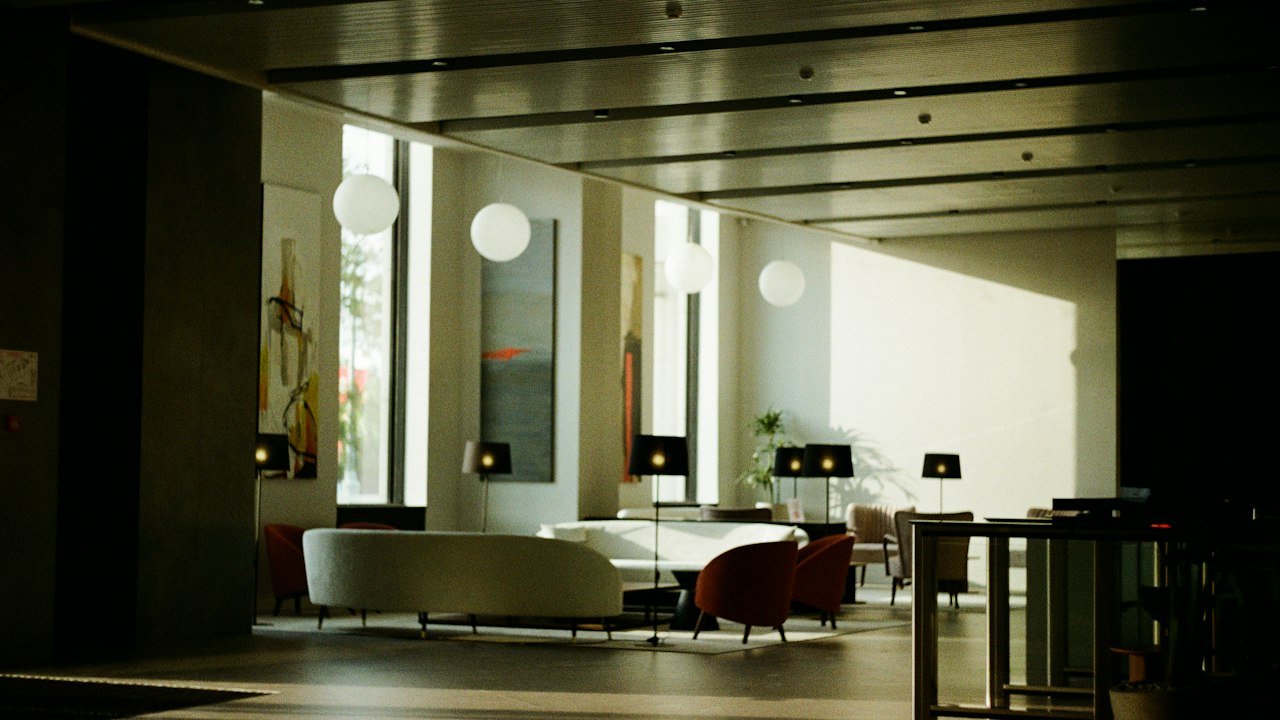
Hotel lobby, contextual image. Photo: Timofey Radkevich / Unsplash. Photo source · Licence.