Most HR software promises simplicity, then quietly creates chaos. Factorial HR is one of the rare exceptions. Over several months we tested it across the UK and Europe, spoke with HR leaders from hotels, restaurants, and professional services firms, and reviewed real implementation stories. What we found was a system that genuinely works for busy, people-centred organisations.
The Big Picture
Factorial is a Barcelona-born HR and business management platform that now supports organisations in more than sixty countries. Starting at roughly eight pounds per user each month, it combines people data, time tracking, recruitment, performance management, expenses, and document handling in one intuitive space.
For leaders who have outgrown spreadsheets but aren’t ready for enterprise software, it hits the perfect middle ground. In the UK and across Europe, where compliance, flexibility, and multilingual workforces often collide, Factorial brings structure without bureaucracy.
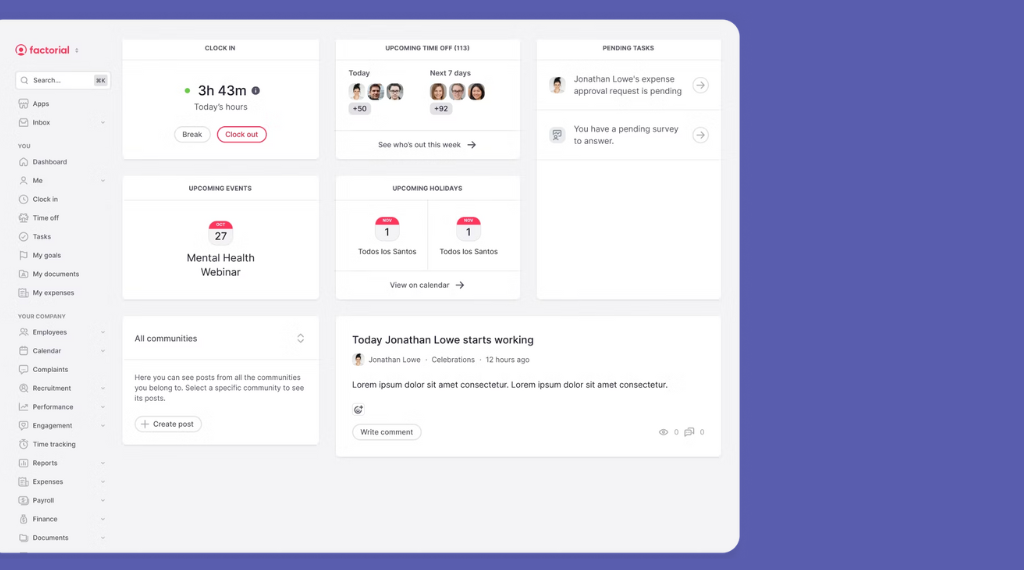
The platform covers core HR functions including employee records, absence tracking, shift scheduling, recruitment workflows, performance reviews, expense management, and document storage. Everything sits in one place, accessible through web or mobile, with security standards built for European privacy requirements.
Why It Works
A System People Actually Use
Factorial looks and feels like it was designed by someone who has worked in HR. Managers approve leave without help. Team structures update instantly when you reassign roles. Document templates are simple and elegant. Timesheets make sense from the first use.
We tested the platform with a forty-person restaurant group in Manchester. Within two weeks, managers were handling absence requests independently. No training sessions. No helpdesk tickets. When software removes friction instead of adding it, adoption becomes effortless.
Built for the Realities of Hospitality and Retail
Few HR tools handle shift work gracefully. Factorial does. You can manage rotating rosters, enforce rest breaks, monitor overnight shifts, and stay compliant with local labour laws. Employees can clock in through a mobile app, a browser, or a biometric terminal. GPS validation ensures accountability without creating a culture of surveillance.
One Brighton hotel we spoke with uses Factorial to manage weekend cover across three properties. The rota syncs automatically. Overtime calculations are accurate. Staff can swap shifts through the app with manager approval. It’s the kind of practical functionality that saves hours every week.
AI That Actually Helps
Factorial’s AI approach is refreshingly practical. Upload a thirty-page handbook and it identifies the clauses that matter. Create a new job role and it recommends competencies based on current market benchmarks. When screening CVs, the system recognises actual skills rather than keyword repetition.
This isn’t about replacing human judgement. It’s about removing the tedious work that slows good decisions down. During our testing, the AI assistant helped draft three job descriptions in under twenty minutes—each one relevant, clear, and ready to publish.
Designed for Growing Teams
Factorial’s modular model is one of its biggest advantages. You start with what you need and add new modules only when they make financial sense. Core HR covers people records, absences, and document management. From there, you can add recruitment, performance management, expenses, payroll integrations, or advanced shift scheduling.
A fifty-person professional services firm in Edinburgh started with basic HR and time tracking. Six months later, they added performance reviews. A year on, they brought in recruitment. Each step made sense financially and operationally. There was no forced upselling or bundled features they didn’t need.
Security and Compliance You Can Trust
Factorial is built for European privacy standards. Data is hosted in Frankfurt on Amazon Web Services with full encryption and daily backups. GDPR compliance is embedded, not added later. The company reports adherence to ISO 27001 and SOC 2 standards and maintains a dedicated Data Protection Officer.
For hospitality operators handling sensitive employee data across multiple sites, this level of compliance brings peace of mind. During our review, we examined audit trails, access controls, and data retention policies. Everything held up to scrutiny.
How Factorial Stacks Up Against Competitors
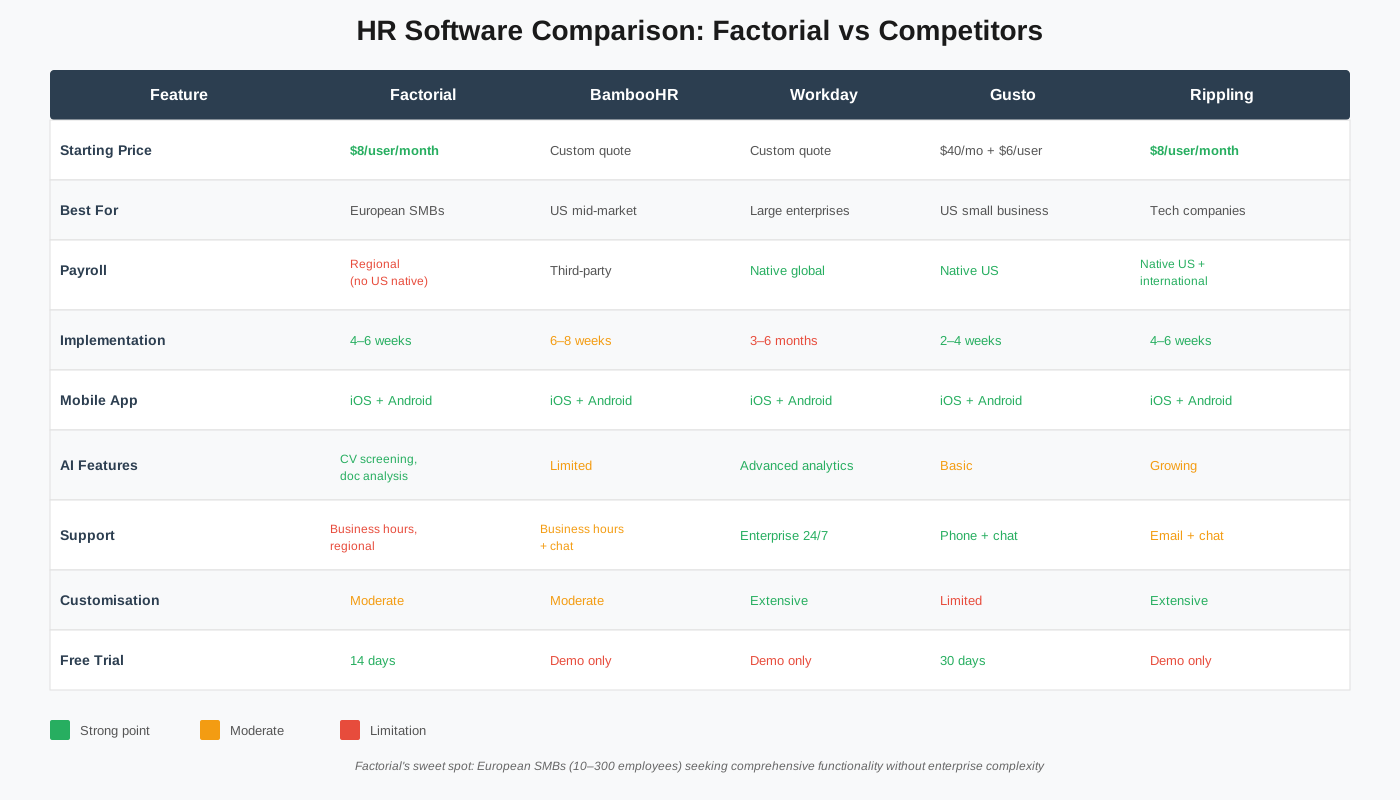
The comparison reveals Factorial’s sweet spot: European companies with 10–300 employees seeking comprehensive functionality without enterprise complexity or pricing.
“Factorial proves that HR technology can be both capable and kind.”
Where It Is Still Growing
Customer support in the UK and mainland Europe is strong and continues to improve. Response times are generally good, though we heard from one user that complex queries occasionally took longer to resolve during peak periods. The support team is knowledgeable and helpful once you reach them.
Payroll coverage in the United States still relies on integration partners, though European payroll links such as Sage, Silae, DATEV, and Zucchetti run smoothly. If you operate primarily in the UK or Europe, this won’t affect you. For organisations with transatlantic operations, it’s worth confirming how payroll will be handled during implementation.
Performance management tools focus on review cycles, goals, and feedback sessions. They work well for standard appraisal processes. If you’re looking for sophisticated talent matrices, succession planning dashboards, or advanced competency frameworks, you may find the current offering somewhat limited. That said, Factorial’s development roadmap suggests these areas are being actively enhanced.
Implementation in Practice
We’ve seen first-hand how well Factorial fits into hospitality and multi-site businesses. The organisations that succeed share a few simple habits that make all the difference.
Clean your data before migration. One restaurant chain spent two weeks auditing employee records, correcting duplicates, and standardising job titles. When migration day arrived, everything was imported cleanly. They avoided weeks of cleanup work later.
Configure workflows carefully. Think through absence approval chains, document signing processes, and shift handover protocols before going live. A boutique hotel group in Bath tested workflows with a small team first, refined them based on feedback, then rolled out to everyone. The result was seamless adoption.
Appoint internal champions. Identify two or three people who understand both the technology and your business. They become the first point of contact for questions and help colleagues feel confident using the system. At a London hospitality group, the operations manager and senior receptionist became champions. Staff trusted them more than external trainers.
Communicate early and often. Tell people what’s changing, why it matters, and how it will help them. One multi-site pub company sent weekly updates in the month before launch, held brief team briefings, and shared short video tutorials. By launch day, most staff were already comfortable with the basics.
Treat rollout as a leadership project. When senior leaders use the platform visibly and consistently, it signals that this matters. One hotel director made a point of approving all leave requests through Factorial during the first month. Team members noticed, and adoption accelerated.
One UK hotel group replaced five different systems with a single Factorial account. Within three months, the HR team saved over twenty hours each week in manual processing. They described it as the first time HR had felt easy in years.
Strengths That Matter
| Feature | What It Means |
| Intuitive design | Managers adopt it quickly with little training |
| Modular pricing | Pay only for what you use and expand when ready |
| Shift scheduling | Built for hospitality rosters and European labour law |
| Practical AI tools | Reduce administrative workload meaningfully |
| European compliance | GDPR and ISO 27001 adherence as standard |
Evolving Areas
| Area | Current Status |
| Global support coverage | Local teams expanding to meet demand |
| United States payroll | Integration-based but improving rapidly |
| Advanced analytics | Focused on simplicity over data science depth |
| Performance tools | Strong for basics, developing for advanced needs |
Verdict
Factorial is one of those rare platforms that earns trust through experience, not through promises. It brings people, process, and compliance together in a way that feels elegant and unforced.
For UK and European hospitality operators, it provides the stability that busy environments crave. Shift scheduling is accurate. Data remains compliant. AI tools remove a great deal of low-value admin work. The platform aims to make HR easier, clearer, and more human—and it achieves that with impressive consistency.
If you’re currently managing HR across spreadsheets, struggling with clunky legacy systems, or simply tired of software that fights you at every turn, Factorial deserves serious consideration. It won’t solve every challenge, but it will make the everyday work of managing people significantly simpler.
Before You Commit
Test it with real data. Set up a trial with actual employee records, rosters, and absence patterns. See how the system handles your specific workflows before committing.
Assess support responsiveness. Contact the support team with a few questions during your trial. Pay attention to response times, helpfulness, and whether they understand your industry.
Request an itemised quote. Ask for a breakdown showing which modules you need now and which you might add later. Understand the total cost of ownership.
Verify local compliance. Confirm that Factorial supports the specific employment law requirements for your region, especially around working time regulations and data protection.
Treat rollout as a leadership project. Identify champions, plan your communication strategy, and ensure senior leaders are visibly committed to making the transition successful.